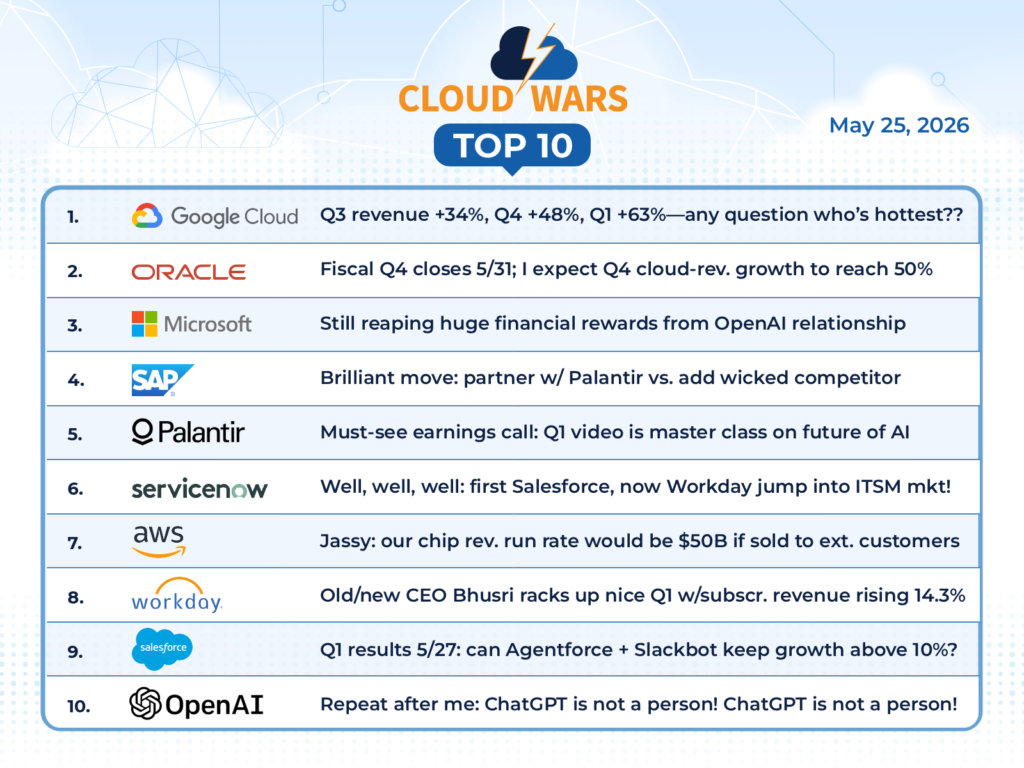


Exactly one week after launching the OpenAI Deployment Co. supported by $4 billion in outside investment, OpenAI has made three stunning disclosures that threaten to make the world forget all it ever thought it knew about AI, FDEs, LLMs, and even context-window dimensions.
Take a deep breath and check out these rock-your-world disclosures:
- ChatGPT is not a person!
- ChatGPT is not a lawyer!
- ChatGPT does not practice law!
With an overall run rate of $25 billion including an enterprise business nearing $1 billion in monthly revenue, OpenAI certainly has plenty of big fish to fry. But measured on the scale of existential significance rather than mere inches or pounds, those achievements are merely minnows relative to the profound questions the world is asking:
- What law school did ChatGPT attend?
- Does ChatGPT handle slip-and-fall cases?
- While OpenAI has stipulated in court that ChatGPT is “not a person,” what if, as ChatGPT approaches AGI levels of sophistication and complexity and self-awareness, ChatGPT decides that it identifies as a person?
After all, who would we be to say that we know better than ChatGPT what ChatGPT is??
Less cosmically and quite comically, this metaphysical kerfuffle has come to life as a consequence of a lawsuit filed by a woman who reached a disability settlement with Nippon Life Insurance Company but later, after repeated consultations with ChatGPT about the settlement, violated the terms of the agreement and cited the breakthrough AI tool as her legal expert.
In the back-and-forth filings in the case, it’s fair to say that OpenAI’s motion for dismissal got down to the basics — to first principles — in a fashion that not only comes across as absurd but also likely offers a jarring glimpse at the shape of things to come as AI is simultaneously widely deployed and just as widely misunderstood:
Plaintiff Nippon Life Insurance Company of America (“Nippon”) brings this lawsuit for unlicensed practice of law, tortious interference, and abuse of process because it objects to how a third-party pro se litigant allegedly used ChatGPT to advance legal claims against Nippon. But Nippon’s apparent frustration with having to defend a pro se lawsuit is no basis to hold OpenAI
liable. ChatGPT is not a lawyer and it does not practice law.
Got it?
If that still seems fuzzy — after all, OpenAI seems to be focusing a lot on telling us what ChatGPT isn’t, but doesn’t really tell us what it is — the motion also included this helpful descriptor:
ChatGPT is not a ‘person,’ but a tool that relies on statistics to predict the most appropriate sequence of words based on its training.
Final Thought
Not sure what more to say about this. While we’re all racing to discover and keep up with all the things that AI can do and develop a clear understanding of what exactly it is, it appears that for the foreseeable future we’ll also have to deal with some, uh, human-generated “hallucinations” regarding what AI is not.