

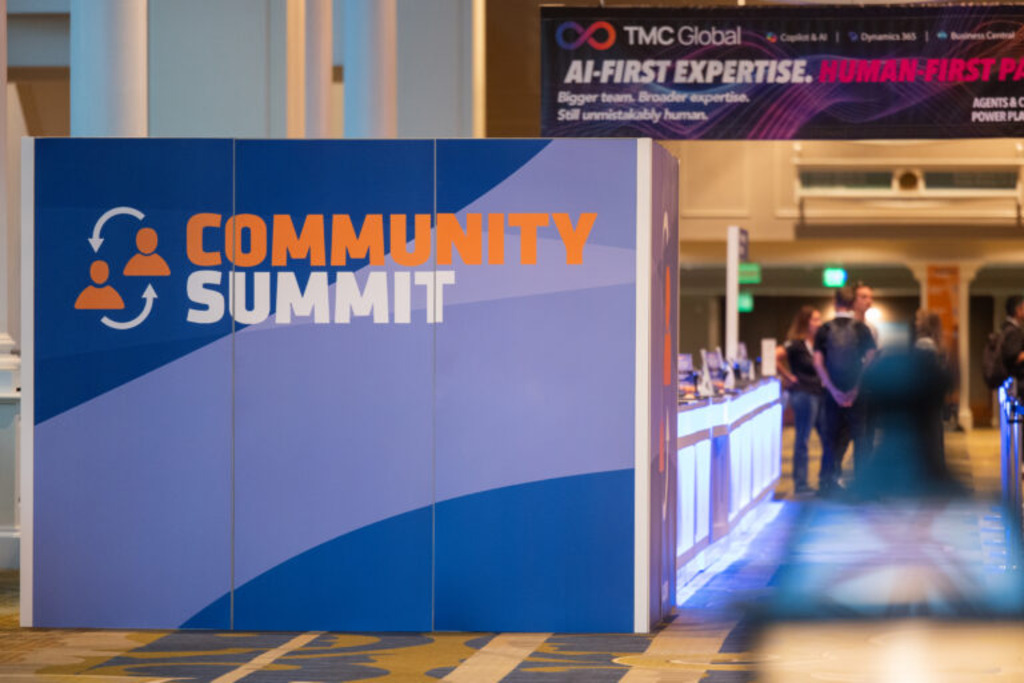
Community Summit NA 2026 kicked off in Nashville, Tennessee, with Dolly Parton’s “9 to 5” playing as John Siefert, Dewain Robinson, and Giuseppe Ianni took the stage. They reflected on the transformation currently taking place with AI, where the technology stands now, and what attendees should keep in mind during the conference to best position their companies for this new era.
“I’m going to ask you this year to really double down on the critical thinking aspect,” Siefert said, crystallizing an ongoing theme about the care and nuance required to implement and integrate AI effectively.
Later, Ianni was joined by Mark Hamblin, Senior Solution Advisor at Insight Works, who gave attendees an overview of the VIP Guest Program, which offers another way to experience Summit. According to Hamblin, the program is a great way to interact with others in person, meet new people, and maintain a focus on education. “It’s really trying to understand how things work in the real world,” he said.
In a fireside chat, Jennifer Harris, CEO and Founder of TMC Global, and Shane Young, Chief AI Officer at TMC Global, also talked about the need to be curious, not fearful, when approaching AI transformations. “Now we’re starting to move to the shift where we’re like, hey, I probably should have … done [this] maturely … with more purpose and in a more governed, secure way.” But, of course, that must be balanced against the need to ensure businesses don’t fall behind. As Harris put it, “Get your right governance, but don’t wait.” Curiosity rather than fear was also emphasized throughout as a valuable mindset for approaching Summit. “Leave here saying, ‘What if?’ What are the opportunities?”
The keynote program then unfolded into a series of conversations and presentations featuring customers, partners, and technology leaders who shared real-world examples of AI and business transformation, highlighting both the opportunities emerging from new technologies and the organizational changes required to realize their full potential.
Vibe Coding Takes Hold
Nurses at HCA Healthcare, a 189-hospital system in Tennessee, recognize the power of AI so clearly that they’ve begun vibe coding in their daily work. That was one powerful indicator of AI’s expanding footprint — and democratization — shared during the keynote program.
The health system is a customer of Lovable, whose GTM leader, Olof Hedin, detailed compelling examples of how customers are using the platform. “Nurses are now vibe coding their own user interface connected to the patient record system, connected to Palantir,” Hedin said. Palantir provides AI-powered automations for healthcare workflows. “You empower people that really know the business process and they do their own business process flow,” he said. Hedin also discussed the company’s fast-growing partnership with Microsoft, which includes bringing Lovable under the enterprise IT governance of Microsoft Copilot Managed Runtime.
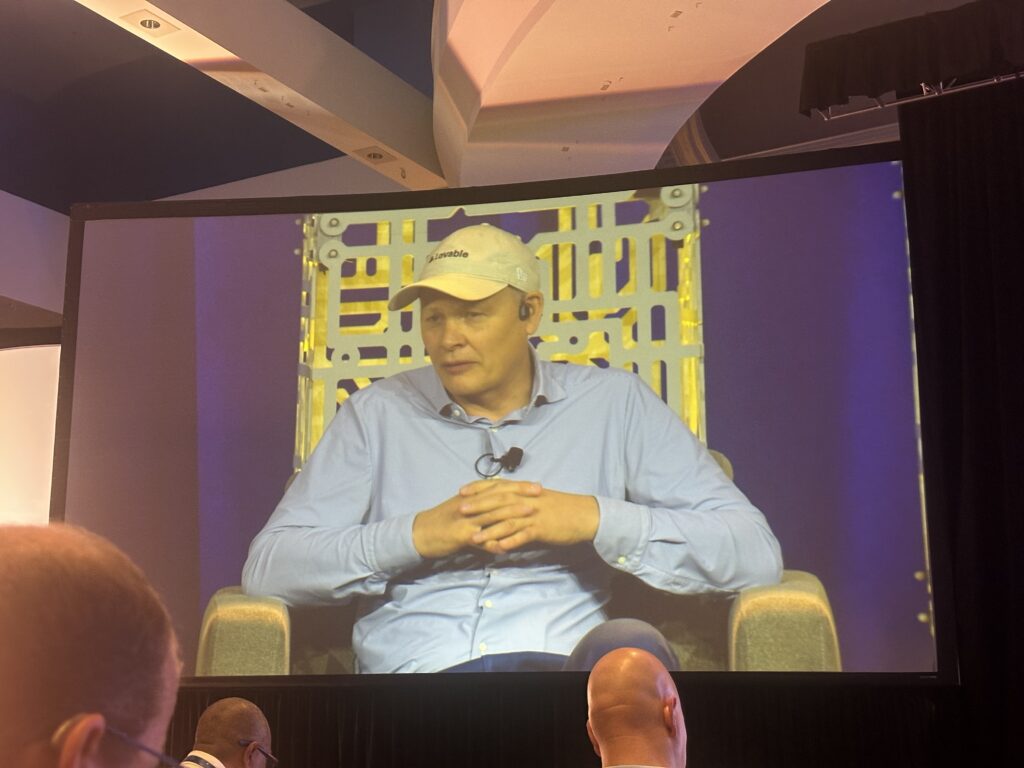
Hedin cited additional customers, including power wheelchair manufacturer Permobil, whose CEO uses Lovable for vibe coding.
Employee Buy-In, Change Management Imperatives
Fire, safety, and security firm Everon served as an example of a company embracing Microsoft technology as part of a large business transformation.
The company was spun out of security firm ADT and given 12 months to replace every system it had in place — without any interruption in customer service or protection. It chose a variety of Microsoft Dynamics systems for functions including ERP and CRM. The company’s CIO, Ryan Fritts, highlighted the importance of having employees on board with the mission and the project plan.
“The thing I’m most proud of isn’t getting through that transition,” Fritts said. “We didn’t lose a single person to resignation during that 12 months,” despite employees sometimes working 100-hour weeks. That’s a testament, he said, to every person understanding and rallying around the larger mission.
Like those employees, Microsoft partner RSM also took a long view. “Sharing a vision that’s longer than the project has been a key to how we succeeded together,” said RSM Owner/Principal Mike Gillis. “It wasn’t just about this statement of work or this project. It was about seeing a vision of how the company would succeed, all the change that would be required, and how we get through it together.”
The importance of taking a proactive approach to change management — considering how AI impacts people and processes — was reinforced by several customers and partners.
Barry-Wehmiller, a 12,000-employee manufacturer of automation equipment and technologies, executed a successful transformation built around Dynamics 365 with Truvio solutions that also required full employee buy-in, said Bonnie Duddleston, Vice President of Enterprise Transformation. She said transformation can’t happen unless people understand the value and recognize the benefits of the change they’re being asked to support.
“When better tools become available in day-to-day life, because people understand the value and they choose to use it, that is really change management,” she added.
Duddleston also emphasized the importance of accurate and consistent data in any technology transformation, noting how it helps accelerate projects involving a variety of technologies. Data hygiene “creates a foundation for AI to deliver even more value in the future,” she said.
Think Big: Workflows, Not Tasks
Microsoft’s Georg Glantschnig, Corporate Vice President, Dynamics 365 Agentic ERP Applications, shared three guidelines reflected in the experiences of the companies discussed above that can help guide other organizations’ AI initiatives.
Glantschnig urged customers to reimagine entire processes and cross-functional workflows, not just individual tasks. He underscored the need for governance so AI operates within a system of trust. Finally, he said customers should focus on required business outcomes when planning AI projects. That means selecting a process, defining what success looks like for the organization, and then learning and scaling as results emerge.
Welcome to Your Hybrid Team
Dona Sarkar, Chief Troublemaker, Microsoft Enterprise AI Advocacy, and Leon Welicki, VP and GM, Power Platform, Microsoft, gave a thoughtful and at times humorous presentation, complete with a live demonstration.
Sarkar started by discussing the ups and downs of AI over the years, noting that AI is now producing work that is actually presentable. On the other hand, it has recently made headlines for not being secure enough. Additionally, it’s been about four years since ChatGPT debuted, but we’re still “not sitting by the pool with margs in hand.” In fact, she said, “agents have made it so we’re working more than we’ve ever worked in our lives.”
Sarkar and Welicki discussed having agents on their teams, describing a future in which AI agents function as members of the workforce rather than simply as tools. To illustrate the concept, Sarkar described how she and Welicki collaborated with their own AI assistants to prepare their presentation. Welicki’s agent created a Microsoft Teams conversation that included both executives and their respective agents, allowing all four to work together. “We worked together, two of us humans, two of us agents, to build you what you’re seeing in front of you today,” Sarkar said. She described the experience as an “inflection point” in how she approaches collaboration.
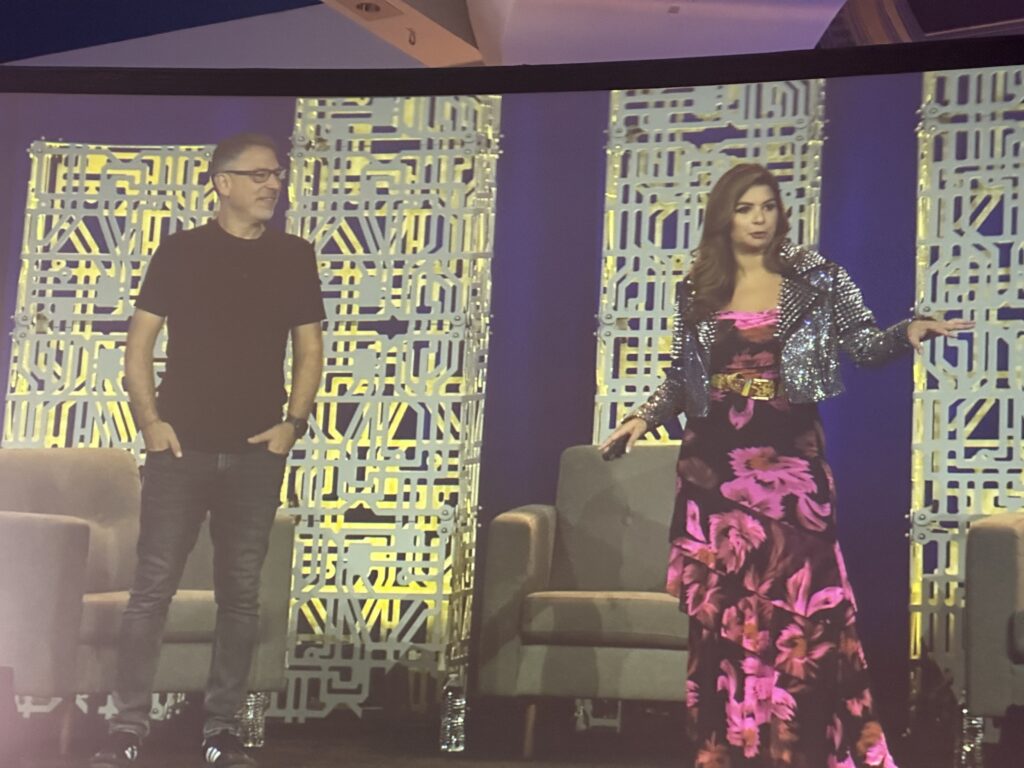
During a live demonstration, the executives showed how an AI coding agent could help improve accessibility in an existing Power App for Sarkar’s fashion business, Prima Dona Studios. Welicki explained that organizations will be able to bring agents into existing applications to perform tasks ranging from coding to security reviews and performance analysis, then deactivate them when their work is complete. “Agents in when you need them, out when you don’t.”
Sarkar closed by arguing that greater automation makes distinctly human capabilities more valuable, including imagination, judgment, empathy, curiosity, and courage.
Final Thoughts
In the end, “9 to 5” proved not only to be a lovely tribute to one of Nashville’s most famed residents, but also indicative of a greater focus on AI not just as marvel and magic, but as a technology that can be put to work alongside us. And as John Siefert reminded attendees in his closing remarks, the people who create, implement, and use that technology, as well as the connections they forge, remain at the heart of Community Summit.
This story was co-written by Maya Rock and Tom Smith with contributions from Kieron Allen.