


Bonnie Tinder shares insights from a recent Salesforce event, exploring how AI agents, unified data, and customer-focused innovation are reshaping the enterprise software landscape.
Bonnie Tinder shares insights from a recent Salesforce event, exploring how AI agents, unified data, and customer-focused innovation are reshaping the enterprise software landscape.
Cycle time, accuracy, cost per successful task completion, and end-user satisfaction are vital metrics that will give visibility into the success of AI projects.
Ajay Patel of IBM outlines how enterprises are shifting from AI experimentation to real-world application, especially in sales, R&D, and operations.

Slack’s new API terms restrict bulk data exports and LLM training. Learn how the real-time search API impacts developers, AI use, and app distribution.

Oracle and SAP have rebranded themselves as cloud-first AI powerhouses, rivaling Google Cloud’s dominance.
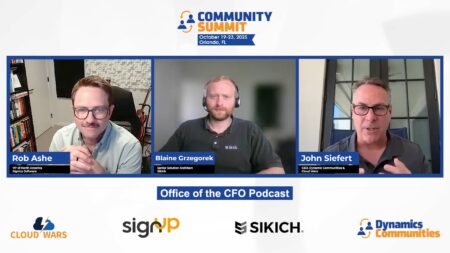
Rob Ashe, Blaine Grzegorek, and John Siefert explore how ISVs provide industry-specific ERP solutions, reduce internal development costs, and enhance scalability.

The latest Cloud Wars update reveals strong growth across major cloud providers, with shifting dynamics that signal an increasingly competitive and evolving market.
Marc Benioff’s 30%-50% AI impact statement puts Salesforce in the spotlight — but also under scrutiny. Are these numbers realistic, or do they reveal gaps in communication about AI’s real role?

OpenAI’s new deal with Google Cloud signals a strategic shift to diversify compute capacity and ease growing tensions in its complex partnership with Microsoft.

With Agentic AI powering 30–50% of Salesforce operations, Marc Benioff’s lack of specificity on human job evolution triggers skepticism.
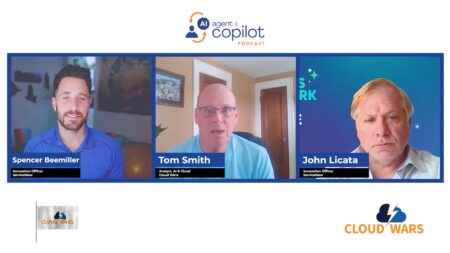
AI agents present opportunities to break down data silos, forecast health events, and develop personalized treatment plans. Such use cases benefit patients, providers, and the entire healthcare ecosystem.

With CEOs leading the charge, AI is redefining how businesses function across all sectors, and Oracle’s market surge is just the beginning of a seismic economic shift.

A wide range of functions in Copilot Control System and related products give admins as well as business leaders strong controls over Copilots, agents, and data.

Market perceptions are shifting, valuing those who leverage AI effectively, with Oracle leading by example.

The public sector now gains access to Salesforce’s AI innovations as Agentforce achieves FedRAMP High, ensuring secure and compliant technology adoption.

Microsoft and Gong are integrating AI-driven sales intelligence into Microsoft 365 and Dynamics, enabling sellers to automate workflows, access deep conversation insights, and drive faster, data-informed decisions using Copilot and custom agents.

AWS’s data center projects in Luzerne and Bucks Counties are part of a broader push to establish Pennsylvania as a leader in cloud infrastructure and AI services.
Snowflake is buying Crunchy Data for a reported $250M to integrate enterprise-grade PostgreSQL into its AI Data Cloud and accelerate agentic AI innovation.
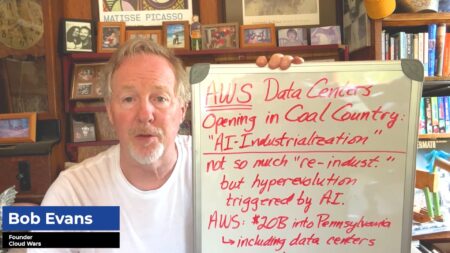
AWS is investing $20B in Pennsylvania to build AI data centers, transforming old coal regions into hubs of digital innovation, signaling the rise of America’s AI industrialization.
IBM unveils watsonx.data integration and intelligence software to streamline and operationalize unstructured enterprise data for AI-driven innovation.