


Salesforce.com announced its intention several days ago to acquire API vendor Mulesoft for $6.5 billion, and Marc Benioff’s decision was smart.
Salesforce.com announced its intention several days ago to acquire API vendor Mulesoft for $6.5 billion, and Marc Benioff’s decision was smart.

Salesforce.com: CEOs are making digital transformation their top priority, & the recent U.S. tax cuts are giving them the resources to be aggressive.

Microsoft’s Executive VP and CFO Amy Hood offers remarkable insights into why everything in Redmond seems to be humming along beautifully these days.

SAP plans a gradual move from SaaS subscriptions to AI usage-based pricing, signaling a structural change in enterprise software economics.
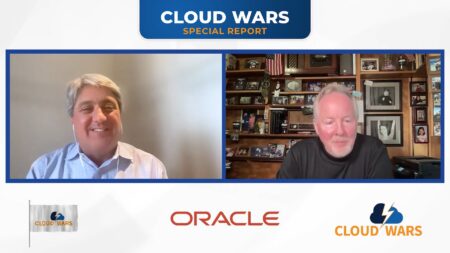
New AI-powered applications enable users to instruct systems with goals instead of processes, dramatically changing enterprise workflows and decision-making.
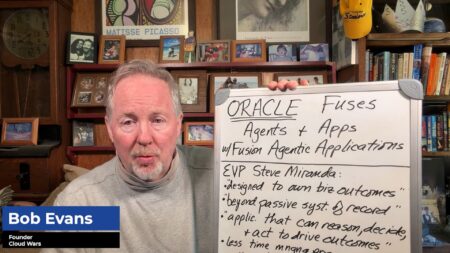
Steve Miranda outlines Oracle’s vision for agentic applications that don’t just assist — but actively drive business outcomes across sales, supply chain, and workforce operations.
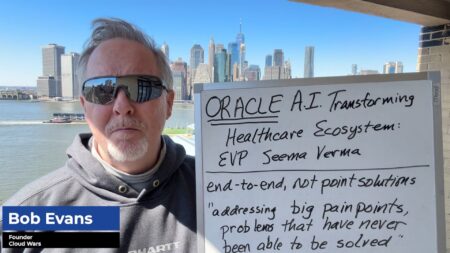
By leveraging AI, Oracle aims to shift healthcare from disconnected systems to a fully integrated ecosystem connecting providers, payers, and patients with improved efficiency and coordination.

Larry Ellison steps back on earnings calls as Mike Sicilia and Clay Magouyrk take the lead, signaling a deliberate and confident leadership transition at Oracle.

A high-energy final day at the AI Agent & Copilot Summit explores reskilling, prompt engineering frameworks, and the shift from AI experimentation to real-world execution.
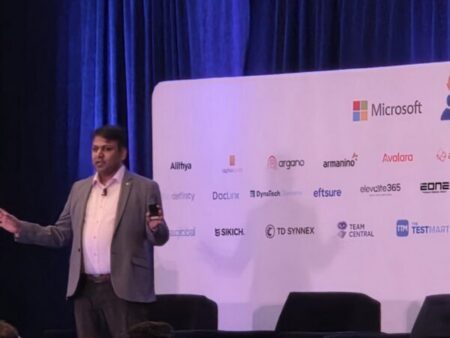
More than 650,000 ERP actions can be executed automatically by agents as a result of Microsoft’s expanding portfolio of MCP servers for Dynamics 365.

OpenAI aims to scale revenue from $5B to potentially $280B by 2030, but a reported $800B cut in infrastructure spending raises questions about how compute-driven growth can sustain such aggressive enterprise expansion.

The Cloud Wars Growth Chart shows extraordinary expansion across leading vendors as AI services drive demand. Palantir’s 70% growth leads the pack, while Google Cloud and Oracle also post dramatic gains.

Rather than replacing SaaS, AI is becoming its most powerful accelerator. Oracle’s approach embeds agentic AI across Fusion applications, enabling faster deployments, reduced operational complexity, and dramatically improved customer outcomes.

Organizations must balance AI experimentation with governance to prevent shadow AI projects from fragmenting data and creating new security risks.

Facing unprecedented pressure from customers navigating AI transformation, SAP, Oracle, and Workday are restructuring their sales organizations. Each company is simplifying customer engagement, flattening leadership structures, and aligning sales with services to deliver faster decisions and stronger outcomes.
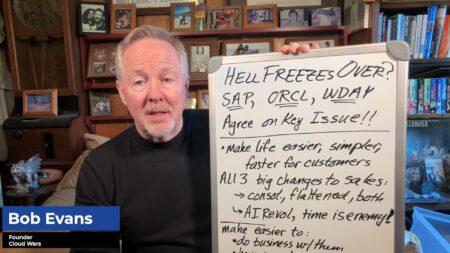
In a rare alignment, SAP, Oracle, and Workday are simplifying sales models to reduce complexity and accelerate digital transformation for customers navigating the AI revolution.
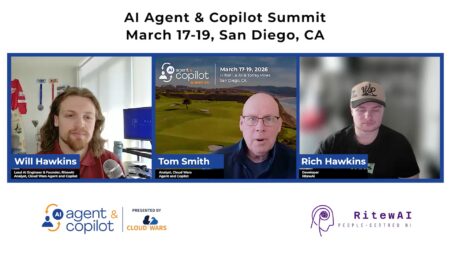
Framework lets users and developers bring their own models, supports both A2A and MCP for seamless integration of diverse AI tools, Will Hawkins and Rich Hawkins note.

Rejecting “SaaSpocalypse” fears, Aneel Bhusri argues AI will enhance enterprise applications rather than replace them. Workday’s strategy focuses on AI agents embedded within its HR and finance platform to drive new growth and customer value.
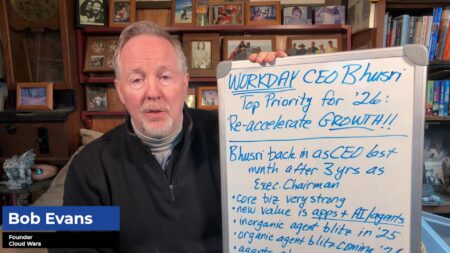
Workday is betting its future growth on blending AI agents with its existing HR and finance platforms, rejecting the notion that large language models alone can replace enterprise software.
Microsoft expands Copilot with business-process agents, tuning templates, and standalone AI assistants designed to transform workflows across sales, finance, service, and enterprise productivity.