


IBM Cloud resurgence will be short-lived unless CEO Ginni Rometty makes bold changes, but the company did have a Q4 growth spurt. I chose 10 examples.
IBM Cloud resurgence will be short-lived unless CEO Ginni Rometty makes bold changes, but the company did have a Q4 growth spurt. I chose 10 examples.
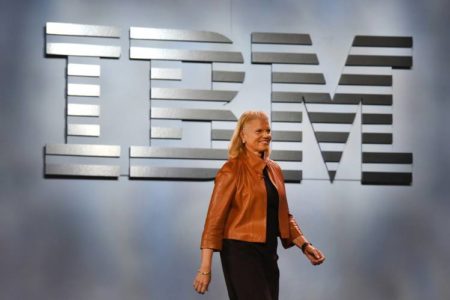
IBM saw its Q4 cloud revenue jump 23%. But CEO Ginni Rometty cannot afford another post-Q4 dropoff. I’ve brainstormed 5 ways that IBM can maintain its pace.

There’s some fresh revenue data for Oracle and Salesforce SaaS clouds, allowing us to compare how customers are responding to the top dog and a top rival.

Google Cloud racked up major Q3 wins in healthcare, financial services and retail, as CEO Sundar Pichai cited “great momentum” for its cloud business.

ServiceNow CEO John Donahoe cited a number of factors in its $3B annual revenue total, a focus on mobile solutions and its Microsoft deals stood out to me.

What’s the Chief Growth Officer role all about? Why is America losing the AI war to Russia and China? Stream the latest episode of Lochhead on Different.

12 months from now, Microsoft will likely bring in $50 billion in cloud revenue. Here are the three strategic reasons why that matters.

How can IBM’s cloud revenue growth be just 8% for Q2? Just 18 months ago, the company generated more quarterly cloud revenue than Microsoft or Amazon.
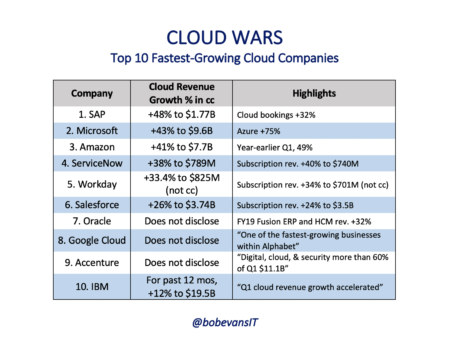
With Q2 earnings about to drop, I’m expecting more hypergrowth driven by the world’s fastest-growing cloud companies: SAP, Microsoft and Amazon.

The three fastest-growing tech companies in the Top 10 each rang up revenue-growth rates of 41% to start 2019. Here’s my take on the top cloud vendors, Q1.

IBM is a major Cloud Wars player, with cloud revenue of $19.5B for the 12 months ended March 31, but its Q1 earnings release reveals a lagging growth rate.

After we shared a Cloud Wars Top 10 by revenue, some readers asked about the leading cloud vendors’ growth rates. Here’s our breakdown and analysis.

Some compelling numbers about Microsoft’s new “IP co-sell partner program” and more partner strategies that the company is pursuing.

SAP CEO Bill McDermott vowed that his company’s $8-billion acquisition of Qualtrics will trigger “the biggest growth opportunity I’ve ever seen.”

Cloud heavyweights Oracle, SAP and Workday continue to compete savagely in terms of mission-critical cloud ERP growth going into 2019.

Blockchain has enormous potential, that might be just what Oracle needs to reignite its sprawling cloud business, which has has lower performance.
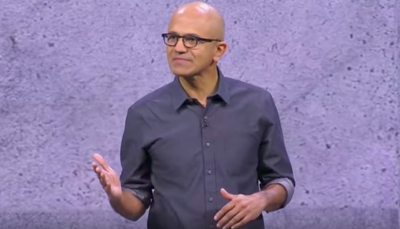
Satya Nadella’s cloud business, Microsoft, is growing at a stunning 58%–and the enterprise cloud hasn’t even begun to reach the fat part of the market.

AI infrastructure spending is reaching unprecedented levels, but rising CapEx is beginning to outpace cash flow, raising questions about how hyperscalers will fund continued AI investment.

Oracle has become the second-fastest growing hyperscaler, with Q1 revenue and growth rates making a major jump.

Oracle’s Q1 cloud revenue and OCI growth rate have jumped this quarter. How can its business model innovation propel the company to rise even higher?