

OpenAI aims to scale revenue from $5B to potentially $280B by 2030, but a reported $800B cut in infrastructure spending raises questions about how compute-driven growth can sustain such aggressive enterprise expansion.
OpenAI aims to scale revenue from $5B to potentially $280B by 2030, but a reported $800B cut in infrastructure spending raises questions about how compute-driven growth can sustain such aggressive enterprise expansion.
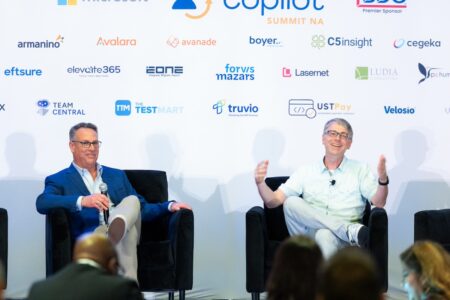
Day two of the AI Agent & Copilot Summit highlights the shift to reasoning-driven copilots, practical agent strategies, and real-world AI adoption.

Dona Sarkar calls out the “tech bro”-driven AI hype machine and shares a blueprint to push AI into mainstream use cases that will deliver on the tech’s considerable promise.

Day 2 of the AI Agent & Copilot Summit included a variety of session formats designed to demonstrate real-world applications of agentic AI.

OpenAI’s ambitious 2030 revenue forecast collides with contradictory spending cuts, prompting concerns about strategy, execution, and credibility among enterprise customers and key infrastructure partners.

Microsoft Copilot Studio’s new features focus on improving agent evaluation, enabling organizations to assess performance at scale, compare versions, and refine AI systems faster with better feedback loops and auditing capabilities.
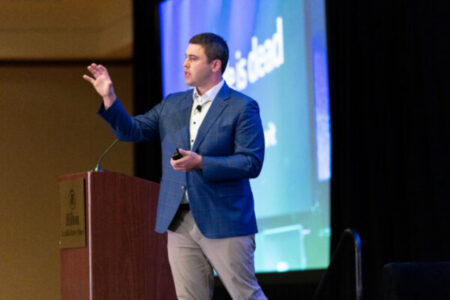
WorkIQ-powered Copilot Cowork orchestrates complex tasks to the point it could take over one-fifth of any team’s work in the near term, while hastening the end of app-powered work.

At AI Agent & Copilot Summit 2026 in Torrey Pines, Christopher Lochhead argues that as AI makes knowledge and execution free, the future belongs to creators who differentiate and build entirely new categories of work.

Microsoft is redefining enterprise productivity by positioning Copilot, agents, and unified AI platforms as the operational backbone of next-generation “frontier firms.”

The Cloud Wars Growth Chart shows extraordinary expansion across leading vendors as AI services drive demand. Palantir’s 70% growth leads the pack, while Google Cloud and Oracle also post dramatic gains.

Microsoft data scientists share how AI is transforming cyber defense by enabling intelligent assistants that analyze attacks, suggest detection rules, and help organizations stay ahead of increasingly sophisticated AI-enabled attackers.

Rather than replacing SaaS, AI is becoming its most powerful accelerator. Oracle’s approach embeds agentic AI across Fusion applications, enabling faster deployments, reduced operational complexity, and dramatically improved customer outcomes.

Armanino’s Gina Montgomery explains why organizations must move beyond AI experimentation and focus on designing trusted Copilot and agent experiences.

Andrea Pinillos shares how Microsoft helps enterprise customers run strategic engagement events through internal tools and explains how similar practical solutions can help organizations deploy AI agents that connect to real business data.

Microsoft demonstrates the real-world power of Copilot Studio with a customer support AI agent that reduces latency by 61% and cuts human escalations by 70% through multi-agent orchestration.

Oracle posted explosive Q3 results fueled by unprecedented demand for AI infrastructure. The company’s cloud business grew rapidly, while its data-center expansion strategy and financing plans attracted strong investor support and reinforced confidence in its long-term AI strategy.

Organizations must balance AI experimentation with governance to prevent shadow AI projects from fragmenting data and creating new security risks.

Mark Polino explains why businesses must rethink security roles, implement strict guardrails, and proactively design policies for an AI-driven environment.

Microsoft’s new Copilot Tasks signals a shift from AI chat to autonomous action, positioning Copilot as a personal assistant that can manage everyday tasks through natural-language commands.

New AI features deliver notable enhancements to five types of SharePoint content while the UX is refreshed and agentic AI strengthens governance.