


Many people try to explain the difference among all roles of the data professional – In this piece, Pablo Moreno adds his own spin on the conversation
Many people try to explain the difference among all roles of the data professional – In this piece, Pablo Moreno adds his own spin on the conversation

Microsoft is expecting major growth in its cloud-native Cosmos database as customers rip and replace “legacy” DBs—like those from Oracle.

This article by Srini Vasan, CEO of eShipGlobal, an on demand transportation management solution provider, discusses the many benefits of Big Data and its analysis to supply chain companies wanting to increase efficiency and profitability in supply chain execution.

As a senior executive or CIO, how can you assure yourself that the artificial intelligence or machine learning-derived recommendations are reasonable and flow logically from the project work that has been performed?While you want to be supportive and encouraging of your team’s work, you don’t want to be misled inadvertently, and you want to confirm that the data science team hasn’t misled itself.

Let’s discuss the basic principles for data repair in Dynamics GP along with how to repair the most common issues! This webinar will cover which method is best in various circumstances, etc.
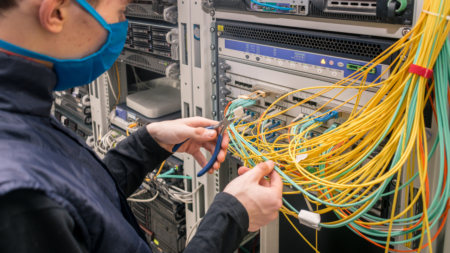
Data repair almost always has to happen at some point, what are the best practices and how do I repair the most common issues! And, dang it, what could be causing this! Learning Objectives: Upon completion participant will be able to understand different data issues that occur in Dynamics GP, understand the best places to find resources to assist in repairing common issues and understand the best practices around data repair in Dynamics GP.

In this session we are going to give a quick overview on connecting to data in D365FO with Power BI and closing major reporting gaps. We will be spending most of our session looking at a simple deployment trick that allows us to create one data set and multiple reports.
Deliverable: Session Attendees will be provided with:
• Power Point documentation on deployment and steps.
• Project Accounting Power BI Example – We will give you the datasets and report files we use in this session. These examples can be deployed in users own environments as a starting point.
The content of this session is geared toward an audience with beginner to intermediate-level knowledge of the subject area.
This session will be available for CPE credits pending completion of session survey post event.

A Microsoft MVP will show several ways the Dynamics 365 for Finance and Operations Excel integration can be leveraged to drastically improve the employee experience at your company. From data cleansing, to centralized template management, to process optimization, see how this incredibly valuable integration can be leveraged in ways you may be surprised by!
The content of this session is geared toward an audience with beginner to intermediate-level knowledge of the subject area.
This session will be available for CPE credits pending completion of session survey post event.
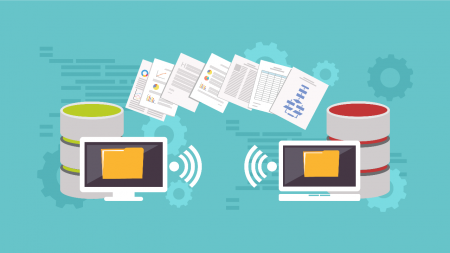
Every project requires data movement in and out of Dynamics 365 Finance and Operations apps. The keys are using bulk imports and effectively keeping a track of multiple moving parts. This session will address:
1. How to import data in bulk with multi-threading for general journal lines
2. How to keep original load and delta loads in sync
3. How to import customers quickly without spending hours to process load
The content of this session is geared toward an audience with intermediate-level knowledge of the subject area.
This session will be available for CPE credits pending completion of session survey post event.

We will discuss the myriad ways to do data repair in GP, we’ll cover normal repair scenarios and go through the best practices for advanced or complex data repair in GP. We will also be reviewing the myriad tools at your disposal for ensuring you efficiently and accurately get the data repaired with low risk to your employer or client. Some little known tools will also be shown (free tools) that you can use to your advantage for accurately repairing or cleaning up data! Some of these tools will be given to you! Tons of tips, tricks and resources to help.
This session is geared for an audience with an intermediate skill set.
This session will be available for CPE credits pending completion of session survey post event.
Are you ready to take your reporting and data analysis to the next level?
This course is an accelerated hands-on 2-day training designed to teach how attendees how to build reporting and data analysis projects with Power BI Desktop and how to share Power BI reports and dashboards with a wide audience of consumers.
During the course, students will gain the real-world skills required to design, deploy, upgrade and monitor reporting and dashboard solutions using the rapidly-evolving Power BI platform. All the essential Power BI concepts and techniques discussed in lectures are reinforced with hands-on lab exercises in which students will move through the actual steps required to build reporting and dashboard solutions and then to make those solutions accessible using app workspaces and the Power BI app model.
This course includes in-depth coverage of the query tools and data modeling tools in Power BI Desktop. Students will learn how to design complex queries and to write advanced DAX expressions to calculate rankings, rolling averages and year-to-year comparisons. Students will also learn how to design interactive reports using slicers, bookmarks and drillthrough pages.
The course discusses essential differences between reports and dashboards and also examines the strengths and weaknesses between the various types of datasets including imported datasets, DirectQuery datasets and LiveConnect datasets.
Instructor: Ted Pattison
Audience: Business Users and Data Analysts
Level: Intermediate
Prerequisites: All students will require a Windows PC running Windows 10, Windows 8.1 or Windows 7 to complete the lab exercises for this course. It is recommended that students install Power BI Desktop before arriving.
Course Modules
1.Introducing the Power BI Platform
2. Designing Queries with Power BI Desktop
3. Designing a Data Model with Power BI Desktop
4. Designing Interactive Reports in Power BI Desktop
5. Designing Dashboards in the Power BI Service
6. Distributing Content using App Workspaces

Microsoft includes many data analytics and AI tools in D365, come learn how to leverage them to better utilize your sales resources and drive revenue.
The content of this session is geared toward an audience with intermediate-level knowledge of the subject area.

This session will highlight a real-world use case of a client’s evolution in their data journey from original system implementation to actual dashboards and reporting. The session will concentrate on lessons learned, potential pitfalls and will showcase the final result: An actionable Power BI workspace that provides analytics for the enterprise!
The content of this session is geared toward an audience with beginner-level knowledge of the subject area.
This session will be available for CPE credits pending completion of session survey post event.

Join us as we explore how to automate the entire data conversions lifecycle to Dynamics 365 Finance and Operations. This session will include a discussion of processes, tools, challenges, and benefits. We will then dive-in to see it in action.
The content of this session is geared toward an audience with intermediate to advanced-level knowledge of the subject area.
This session will be available for CPE credits pending completion of session survey post event.

Customer-centricity is now a de facto business imperative and improving the overall customer experience is a top priority. But delivering connected experiences is often challenging given the systems and data are often siloed in ways that mirror organizational structures. Join this session to learn how Dynamics 365 Customer Insights, Microsoft’s customer data platform, can enable your organization to gain a 360-degree view of your customers across channels and drive proactive business processes. Extend the solution using Azure Synapse Analytics to combine customer data with financial, operational, and unstructured IoT data to build custom machine learning models and gain AI-driven insights.

Now more than ever it is crucial to make use of the technology readily available to help keep your business productive and competitive. Today, organizations can leverage near real-time business intelligence (BI) to make data-driven decisions to drive better business outcomes, collaborate more efficiently and empower all users become data heroes.
No X-ray vision needed; Power BI enables organizations to connect to and visualize data using one unified, scalable platform which allows you to see your data through a single pane of glass.
Uncover hidden data insights through readable charts and powerful dashboards. Create accurate forecasts, fine-tune operations, become more agile and responsive, all while maximizing efficiencies in ways that simply weren’t possible in the past. If you’re not putting those analytic models to work for your business, you may be missing potential opportunities to improve cash flow and become more competitive.
During this session we will show you how to utilize powerful end-to-end business solutions by connecting cloud computing, Microsoft Power BI and Dynamics AX/F&O to transform your business.

Salesforce is deepening Slack’s role in enterprise AI by allowing users to orchestrate multiple AI agents while maintaining centralized authentication and security.

AWS is expanding Security Hub with AI-specific protections and Azure support to secure AI and multicloud environments from a single platform.

Microsoft’s latest education findings reveal that AI access is no longer the hurdle—effective implementation and structured training are.

Purview, Defender, and Graph API are all being enhanced to bring agents running on end-user devices under unified governance ‘control plane.’