

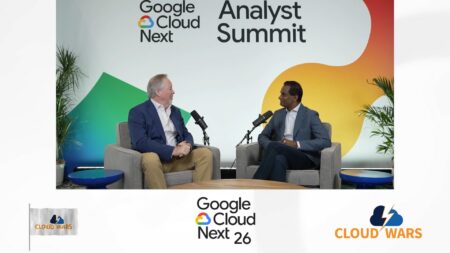
Enterprise AI success is shifting from software consumption metrics to measurable business outcomes and shared accountability between providers and customers.
Enterprise AI success is shifting from software consumption metrics to measurable business outcomes and shared accountability between providers and customers.
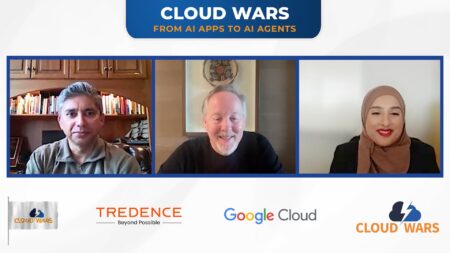
Enterprises must move beyond AI apps and build agentic systems that reason, coordinate, and execute across multiple business workflows.
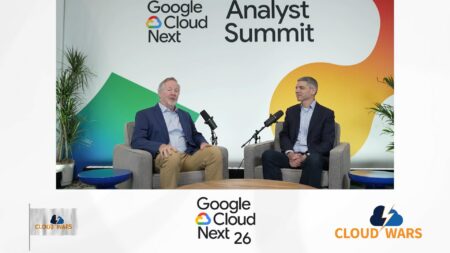
Enterprises must redesign data platforms so autonomous AI agents can reason, act, and securely drive business outcomes across the organization.

After years of disconnected AI breakthroughs, Gemini Enterprise delivers a cohesive system that simplifies deployment, enhances usability, and enables enterprises to fully leverage agentic AI across operations, data, and workflows.
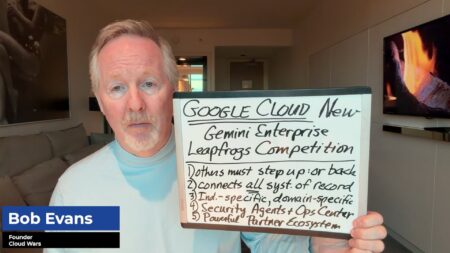
At Google Cloud Next, Gemini Enterprise emerges as a major step forward in enterprise AI, combining integrated data access, industry agents, advanced security, and partner innovation into a simplified, end-to-end platform.
Google Cloud heads into its Next event with strong momentum, focusing on AI security, sovereignty, and Gemini Enterprise enhancements to help enterprises scale AI while addressing rising cybersecurity threats and regulatory demands.
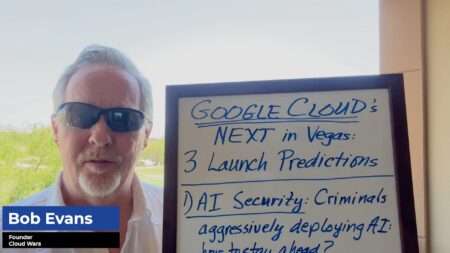
Google Cloud heads into Next with momentum, expected to unveil major advances in AI security, sovereignty, and Gemini Enterprise to strengthen its leadership in the rapidly evolving AI Economy.

Google Cloud is rapidly gaining momentum in the AI-driven cloud market, outpacing AWS and Microsoft in growth rates while reshaping competitive dynamics despite still trailing both rivals in total revenue scale.
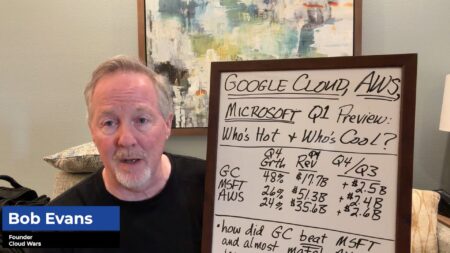
Despite Microsoft and AWS dominating in scale, Google Cloud’s Q4 performance suggests it may be capturing a disproportionate share of new enterprise cloud and AI workloads.
Google introduces Gemma 4, an advanced open AI model series designed for local deployment. With mobile-first capabilities, multimodal processing, and strong reasoning, it empowers developers to build scalable AI applications without relying on cloud infrastructure.
Google Cloud showcased its cybersecurity strategy at RSAC 2026, highlighting its Wiz acquisition and new agentic AI tools designed to automate threat detection, improve response times, and strengthen multicloud security in an increasingly complex digital landscape.
Google Cloud and Baker Hughes have partnered to tackle the massive energy demands of AI data centers, combining industrial power expertise with advanced AI to improve efficiency, sustainability, and reliability in global digital infrastructure.
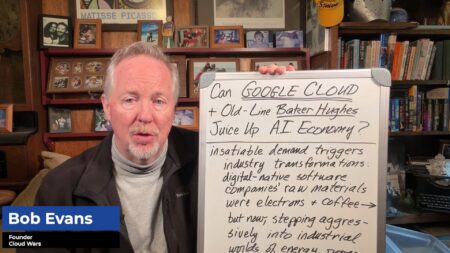
The surge in AI data center demand is collapsing industry lines, pushing tech companies into energy partnerships that could redefine power generation, infrastructure investment, and long-term innovation strategies.

Massive Google Cloud customer use cases and the emergence of patient agency supported by AI are early highlights of HIMSS 2026, according to healthcare tech exec Paul Swider.

Google Cloud and CVS Health launch Health 100, an AI-driven platform unifying patient data and enabling agentic healthcare workflows, signaling a major shift toward personalized, interoperable healthcare ecosystems.

The Cloud Wars Growth Chart shows extraordinary expansion across leading vendors as AI services drive demand. Palantir’s 70% growth leads the pack, while Google Cloud and Oracle also post dramatic gains.
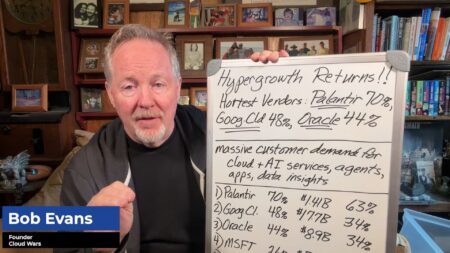
Explosive enterprise demand for AI and cloud services is driving a resurgence of hypergrowth across the Cloud Wars Top 10, led by Palantir, Google Cloud, and Oracle.
Oracle’s fiscal Q3 could deliver massive cloud and RPO growth driven by AI demand, though it may still fall short of Google Cloud’s 48% hyperscaler growth benchmark.
State-backed adversaries are leveraging AI tools like Gemini for reconnaissance, coding, and vulnerability research, enhancing phishing campaigns and accelerating attack lifecycles across global targets.
Unilever and Google Cloud are building an AI-first marketing and fulfillment engine that signals a new era of agentic commerce.