

OpenAI’s new deal with Google Cloud signals a strategic shift to diversify compute capacity and ease growing tensions in its complex partnership with Microsoft.
OpenAI’s new deal with Google Cloud signals a strategic shift to diversify compute capacity and ease growing tensions in its complex partnership with Microsoft.
With CEOs leading the charge, AI is redefining how businesses function across all sectors, and Oracle’s market surge is just the beginning of a seismic economic shift.

Microsoft demos specific Purview functions that customers can tap into in AI use cases so they are protecting critical corporate data assets from both malicious external actors and insider threats.

With the introduction of MCP servers, AI assistants can now understand and interact with AWS infrastructure in real time.
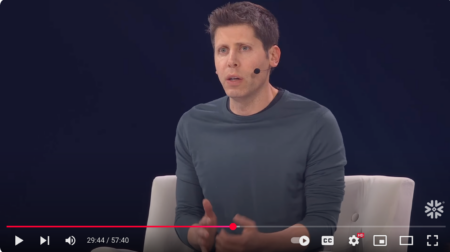
Sam Altman’s Snowflake Summit keynote was clear: curiosity and rapid iteration are key to AI success.
SAP’s AI-driven flywheel strategy connects applications, data, and AI to power agile, end-to-end enterprise operations and future-ready innovation.

Data from security firm Harmonic finds the typical organization has hundreds of AI apps in use, many of them unmanaged, while a majority of firms lack adequate governance strategies.
Advanced Copilot functions include search and notebooks, while new agents deliver on the promise of an integrated human-AI workforce that’s quantified in new research.
OpenAI and Microsoft’s support for Anthropic’s Model Context Protocol (MCP) marks a major step toward universal AI agent interoperability, signaling a shift from competition to collaboration in building open standards for seamless integration and future AI governance.
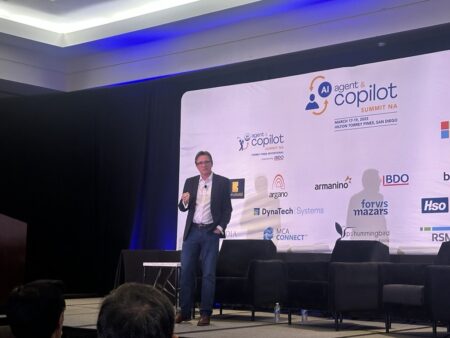
The AI Agent & Copilot Summit focused on the rapid adoption of AI, the role of Copilots and agents in business productivity, and the challenges of aligning technology with organizational strategy.
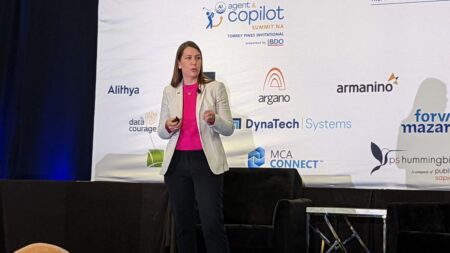
Microsoft execs detail agentic AI opportunities and progression, as well as how their platforms make it all possible. BDO exec details organizational considerations for AI success.

Strategic innovation and unmatched multicloud deals powered Oracle’s dramatic 63% RPO growth, establishing it as a formidable force in the cloud infrastructure market.
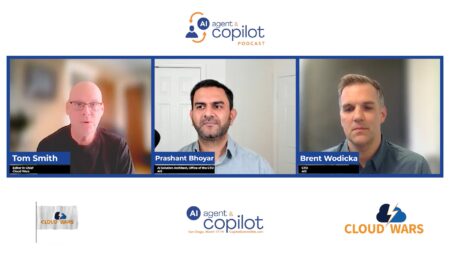
AI Agent & Copilot Summit speakers Brent Wodicka and Prashant Bhoyar will share insights on building AI literacy, implementing GenAI, and future trends in agent and copilot adoption at the upcoming event in San Diego.
Oracle is rapidly scaling its cloud and AI business, marked by a 63% RPO surge and major investments in data center capacity and AI solutions.
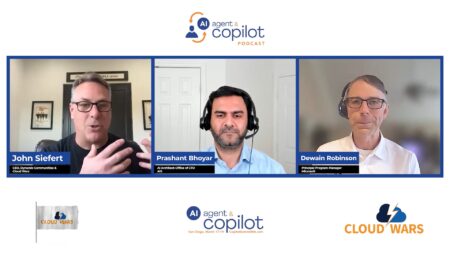
AI Agent & Copilot Summit speakers Dewain Robinson and Prashant Bhoyar previerw their session on How to Build Agents Leveraging the Best of Copilot Studio and Azure AI Foundry.

Microsoft introduces new AI-powered search enhancements and expands its Copilot (AI) Bounty Program to increase the security of its widely used AI technology.
Larry Ellison asserts that AI is humanity’s greatest achievement, exceeding innovations like electricity and the Industrial Revolution.

Microsoft CEO Mustafa Suleyman announced that the Think Deeper feature, powered by OpenAI’s o1 ‘magical’ reasoning model, is now available to all Copilot users.

Despite DeepSeek’s debut triggering a major AI stock selloff, Oracle and Microsoft view its leaner AI model as a positive force accelerating industry innovation.
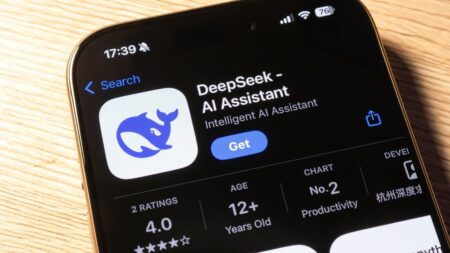
New AI Assistant bursts onto the scene with a benchmark for price/performance that sends US tech stocks into a one-day tailspin. What it means for customers and US competitors.