


Microsoft launches a real-time speech transcription model delivering partial results in just over 100 milliseconds, setting the stage for faster, more accurate, and more intelligent AI voice agents.
Microsoft launches a real-time speech transcription model delivering partial results in just over 100 milliseconds, setting the stage for faster, more accurate, and more intelligent AI voice agents.

As part of Community Summit NA, RSM and Community Summit brought together business, finance, and technology leaders for an exclusive…

Artificial intelligence is creating new business categories, disrupting traditional e-commerce, and empowering entrepreneurs to build products and services with unprecedented capabilities.
Workday accelerated its agentic AI transformation at Rising 2026, unveiling six major innovations spanning autonomous agents, unified data, governance, and workforce intelligence while strengthening its competitive position against SAP, Oracle, and Microsoft.

Proactive AI agents are transforming how businesses operate and sell products. Microsoft’s Dona Sarkar explains why companies must restructure innovation teams, simplify websites for AI-powered purchasing, and prepare for agents to become customers.
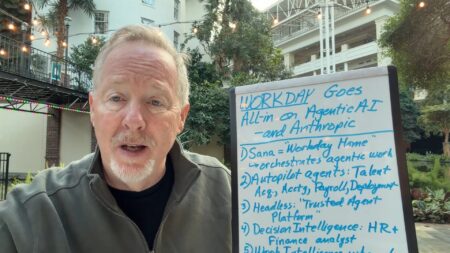
Workday doubles down on agentic AI at Workday Rising, unveiling Sana, four autopilot agents, and new intelligence capabilities designed to accelerate enterprise automation and strengthen its competitive position.
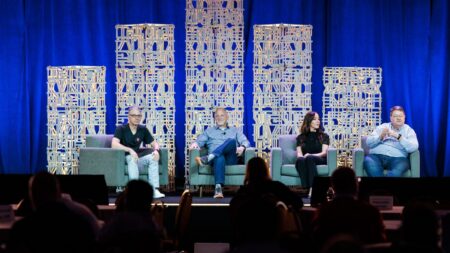
Microsoft’s Leon Welicki urged Community Summit attendees to overcome their fear of AI agents, highlighting Power Platform customer successes and demonstrating how humans and intelligent agents can collaborate to improve business processes.

Microsoft executives Leon Welicki and Dona Sarkar joined Innovia Consulting’s Shawn Dorward to discuss practical AI adoption strategies, emphasizing leadership, clear business goals, and choosing the right technologies to improve enterprise workflows.

Microsoft’s Digital Defense Report 2026 explains how automation accelerates threats and why organizations must embrace continuous security monitoring, proactive threat detection, and faster incident response.

ServiceNow launches Flow, a standalone AI-native service desk that deploys in under a day and uses agentic automation to transform how businesses manage employee requests.
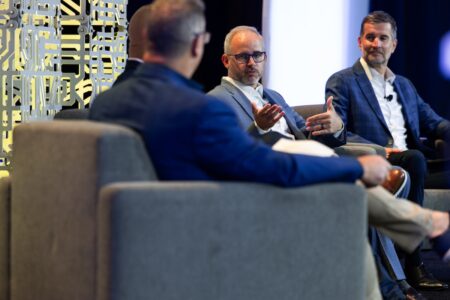
Microsoft and HSO executives explained how Work IQ can help Dynamics 365 customers reduce AI costs, improve agent accuracy, and streamline business processes during a Community Summit NA roundtable focused on enterprise AI adoption.

At Community Summit 2026, Women in Tech speakers explored how artificial intelligence, mentorship, professional relationships, and self-advocacy can help women navigate workplace challenges, develop leadership skills, and build more fulfilling careers.
Google Cloud CEO Thomas Kurian revealed 12 powerful Gemini Enterprise customer success stories, highlighting extraordinary AI ROI, productivity gains, and cost savings as nearly 90% of Fortune 100 companies adopt the platform.
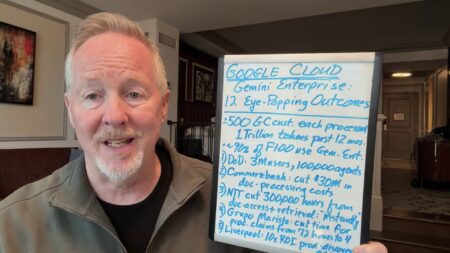
Google Cloud showcases 12 powerful Gemini Enterprise customer success stories, demonstrating how businesses are turning AI investments into cost savings, operational efficiency, and competitive advantage.
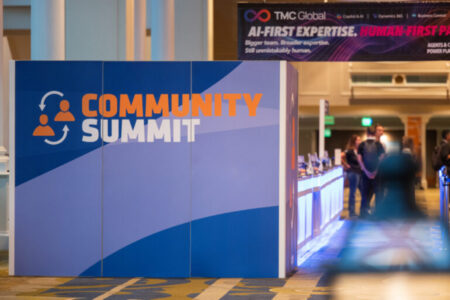
Community Summit NA 2026 opened in Nashville with Microsoft leaders and enterprise customers exploring AI agents, vibe coding, governance, and business transformation, emphasizing the importance of human judgment, employee engagement, and measurable outcomes.

Google Cloud’s Gemini Agent combines personal AI capabilities with enterprise-grade governance, multicloud connectivity, and model flexibility. CEO Thomas Kurian believes these integrated features will help organizations deploy sophisticated AI agents more efficiently and affordably.

Procurement leaders expect AI to drive innovation and accelerate core processes, but first they need to reinvent their operations and get their people on board.
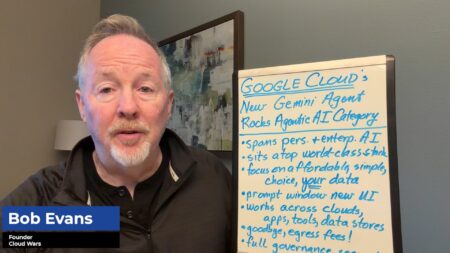
Google Cloud’s Gemini agent launch signals a broader shift in enterprise AI, as business leaders increasingly demand technology partners who understand operational priorities rather than simply promoting technical capabilities.

Explore how Google Cloud and Thales, alongside SAP and NVIDIA, are embedding security and governance into agentic AI workflows — and why industry collaboration could be key to building a safer, more trustworthy AI ecosystem.

IBM research finds that financial institutions expect major gains from agentic AI but must redesign outdated operating models, integrate data, and establish accountability across workflows to realize those benefits.