


Despite strong optimism around AI adoption, Workday found that most enterprise users still act as intermediaries between AI tools, reducing productivity and undermining the promise of automation.
Despite strong optimism around AI adoption, Workday found that most enterprise users still act as intermediaries between AI tools, reducing productivity and undermining the promise of automation.

Palantir’s 70% growth highlights how outcome-based AI pricing and rapid enterprise expansion are creating a new playbook for cloud success.

SAP and Palantir are helping redefine enterprise technology, as Christian Klein and Alex Karp both argue that AI-driven execution has moved their companies beyond the traditional definition of software vendors.
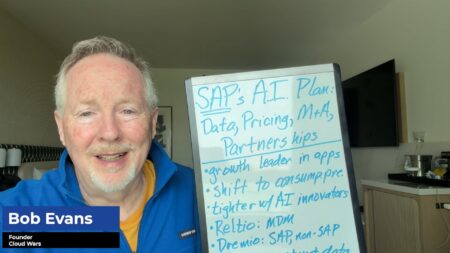
SAP’s AI plan includes strategic partnerships and acquisitions as well as major shifts toward consumption pricing and customer alignment.
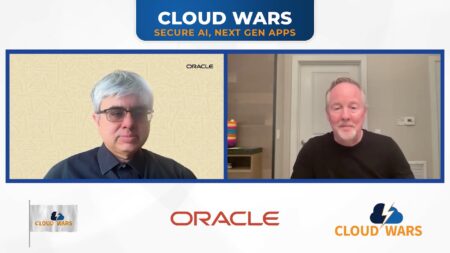
Agentic AI is shifting enterprise systems from answering questions to taking secure, autonomous action at scale.
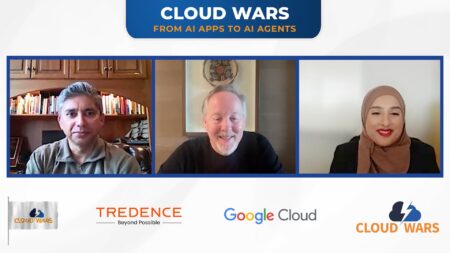
Enterprises must move beyond AI apps and build agentic systems that reason, coordinate, and execute across multiple business workflows.
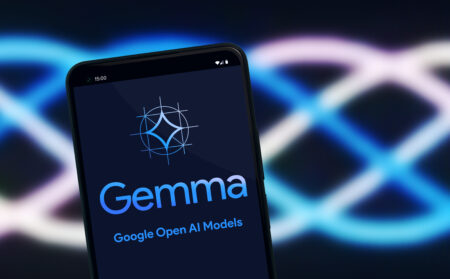
Google introduces Gemma 4, an advanced open AI model series designed for local deployment. With mobile-first capabilities, multimodal processing, and strong reasoning, it empowers developers to build scalable AI applications without relying on cloud infrastructure.

Microsoft’s $10 billion Japan investment underscores a strategy combining AI infrastructure, workforce development, and data sovereignty to drive global growth while meeting increasingly strict regional compliance requirements.

With 209% ROI and six-month payback, Business Central is helping organizations streamline finance operations while enabling AI-powered insights through unified data and standardized processes.

With its AI-first strategy, Oracle is transforming its database into an intelligent decision-making engine, enabling customers to activate data and gain a major competitive edge.
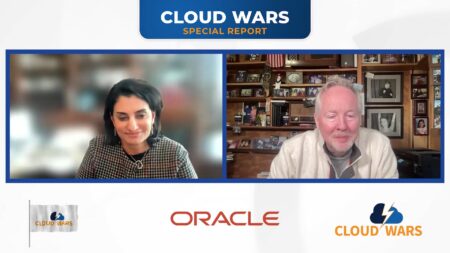
A unified, end-to-end approach is replacing fragmented healthcare systems with connected data and intelligent workflows powered by modern infrastructure.
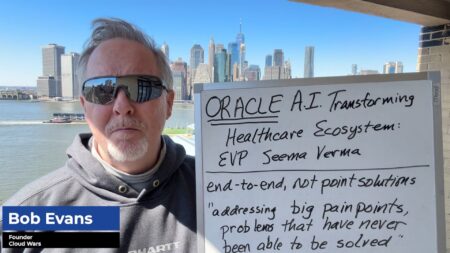
By leveraging AI, Oracle aims to shift healthcare from disconnected systems to a fully integrated ecosystem connecting providers, payers, and patients with improved efficiency and coordination.

Agentforce Contact Center represents Salesforce’s next evolution in customer service, merging voice, digital channels, and AI into one system. It empowers autonomous AI agents while ensuring human operators receive full interaction context for faster issue resolution.

Microsoft is redefining enterprise productivity by positioning Copilot, agents, and unified AI platforms as the operational backbone of next-generation “frontier firms.”

Explosive enterprise demand for AI and cloud services is driving a resurgence of hypergrowth across the Cloud Wars Top 10, led by Palantir, Google Cloud, and Oracle.
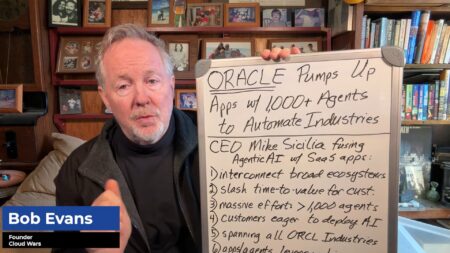
Oracle is rejecting the “end of SaaS” narrative, arguing that AI agents will dramatically expand the power and value of enterprise applications.
Salesforce’s planned acquisition of Momentum strengthens its AI portfolio by integrating unstructured conversational data into Agentforce 360 and Slackbot, accelerating agentic workflows and delivering deeper customer insights for sales and go-to-market teams.

Herain Oberoi highlighted two fundamental AI-Era cybersecurity questions: Can we trust the data, and is the AI system safe and secure? These concerns underpin Microsoft’s integrated governance and security strategy.

State-backed adversaries are leveraging AI tools like Gemini for reconnaissance, coding, and vulnerability research, enhancing phishing campaigns and accelerating attack lifecycles across global targets.

Unilever and Google Cloud are building an AI-first marketing and fulfillment engine that signals a new era of agentic commerce.