

AI is dramatically accelerating software development, but Cedric Wells argues that organizations must balance rapid innovation with architecture, security, governance, and quality assurance to safely move AI-generated solutions into production.
AI Copilot Podcast
AI is dramatically accelerating software development, but Cedric Wells argues that organizations must balance rapid innovation with architecture, security, governance, and quality assurance to safely move AI-generated solutions into production.

Puri discusses how AI-powered analysis of vast biological databases helps researchers identify patterns, design new therapeutic molecules, and significantly improve experimental success rates in modern pharmaceutical research.
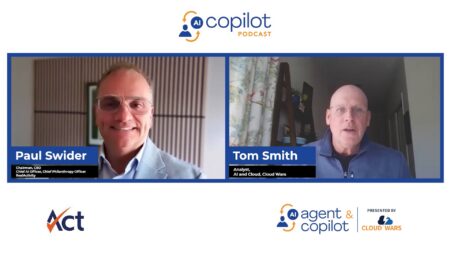
AI and Microsoft expert Paul Swider details a personal health assistant he’s built called Tula that unifies all of a patient’s data and aims to level the healthcare playing field.
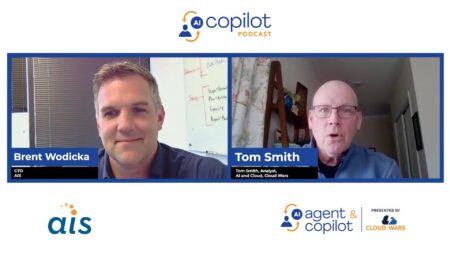
Brent Wodicka, CTO of AIS, explains how ISVs and corporate software developers need to build ‘agent-friendly pathways’ to software platforms to enable autonomous actions.
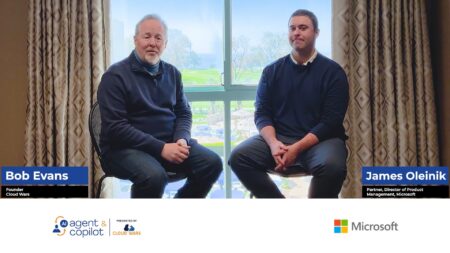
A major barrier to AI adoption isn’t willingness but governance, as leaders seek secure, observable, and controllable systems to confidently deploy AI across enterprise environments.
HSO explains how embedding AI agents into ERP and business workflows is accelerating implementations, improving data transformation, and driving real user adoption through industry-specific automation.
In their highlights from AI Agent and Copilot Summit, Ronak Mathur and Marie Wiese note the importance of ongoing human involvement, as well as the opportunity for partners to provide licensing guidance while building trust.
In their highlights from AI Agent and Copilot Summit, Kenny Mullican and WIll Hawkins explain the value of support for third-party tools, note the need for greater interoperability in the Microsoft stack.
Massive Google Cloud customer use cases and the emergence of patient agency supported by AI are early highlights of HIMSS 2026, according to healthcare tech exec Paul Swider.
Microsoft data scientists share how AI is transforming cyber defense by enabling intelligent assistants that analyze attacks, suggest detection rules, and help organizations stay ahead of increasingly sophisticated AI-enabled attackers.
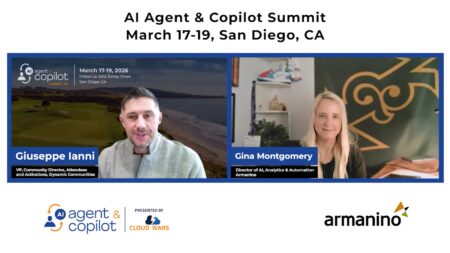
Armanino’s Gina Montgomery explains why organizations must move beyond AI experimentation and focus on designing trusted Copilot and agent experiences.
Andrea Pinillos shares how Microsoft helps enterprise customers run strategic engagement events through internal tools and explains how similar practical solutions can help organizations deploy AI agents that connect to real business data.
In this episode, Diego Araujo discusses the challenges enterprises face when adopting AI copilots in Dynamics 365 Finance & Operations, emphasizing governance, user adoption, and selecting high-impact use cases that can demonstrate value quickly and overcome skepticism.
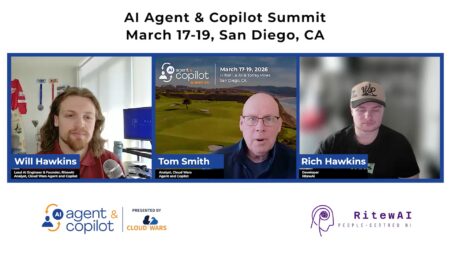
Framework lets users and developers bring their own models, supports both A2A and MCP for seamless integration of diverse AI tools, Will Hawkins and Rich Hawkins note.
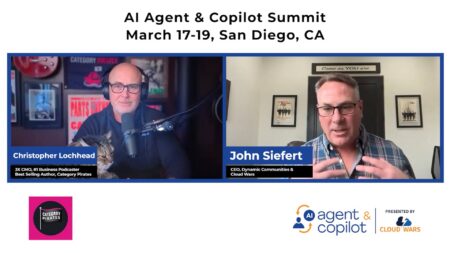
Christopher Lochhead outlines why those who cling to execution and efficiency risk obsolescence, while those who design new categories, solve new problems, and build capital flywheels will define the next era of business.
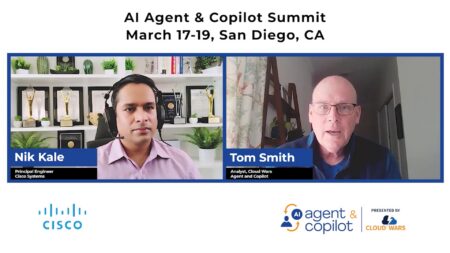
Product architect Nik Kale explains how bringing AI and human intelligence directly into a product ensures customers receive targeted remediation content and guidance.
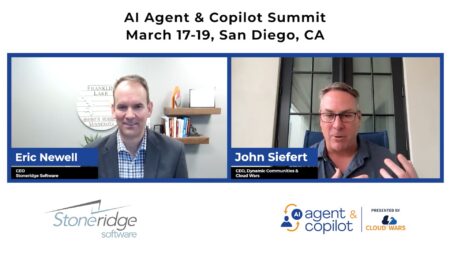
Stoneridge Software CEO Eric Newell details his session at the upcoming AI Agent & Copilot Summit, which will cover how to build a secure and productive AI strategy.
Healthcare leader weighs in on how AI models and mulit-cloud underpin customers’ mission-critical systems, and how they should prepare for potential model changes.
Jen Harris and John Siefert examine the shift from centers of excellence to centers of value, as AI agents automate reactive work and push humans toward more creative, proactive roles.
A practical conversation on enterprise AI adoption that focuses on governance, collaboration, and learning from failure rather than chasing hype or replacing human interaction.