

Microsoft data scientists share how AI is transforming cyber defense by enabling intelligent assistants that analyze attacks, suggest detection rules, and help organizations stay ahead of increasingly sophisticated AI-enabled attackers.
Microsoft data scientists share how AI is transforming cyber defense by enabling intelligent assistants that analyze attacks, suggest detection rules, and help organizations stay ahead of increasingly sophisticated AI-enabled attackers.

Explosive enterprise demand for AI and cloud services is driving a resurgence of hypergrowth across the Cloud Wars Top 10, led by Palantir, Google Cloud, and Oracle.
AI agents are starting to handle purchases, and companies like Google and Mastercard are racing to build the systems that make those transactions safe and trusted.
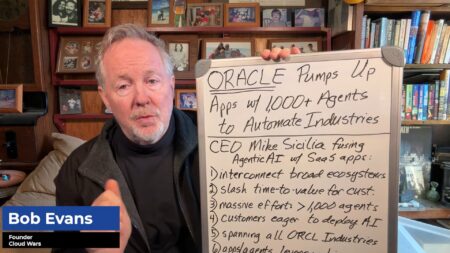
Oracle is rejecting the “end of SaaS” narrative, arguing that AI agents will dramatically expand the power and value of enterprise applications.
Armanino’s Gina Montgomery explains why organizations must move beyond AI experimentation and focus on designing trusted Copilot and agent experiences.
Mason Siefert explores the concept of smart friction in the grocery industry, which enhances brand identity and customer experience.
Andrea Pinillos shares how Microsoft helps enterprise customers run strategic engagement events through internal tools and explains how similar practical solutions can help organizations deploy AI agents that connect to real business data.
Microsoft demonstrates the real-world power of Copilot Studio with a customer support AI agent that reduces latency by 61% and cuts human escalations by 70% through multi-agent orchestration.
Organizations must balance AI experimentation with governance to prevent shadow AI projects from fragmenting data and creating new security risks.

Mark Polino explains why businesses must rethink security roles, implement strict guardrails, and proactively design policies for an AI-driven environment.
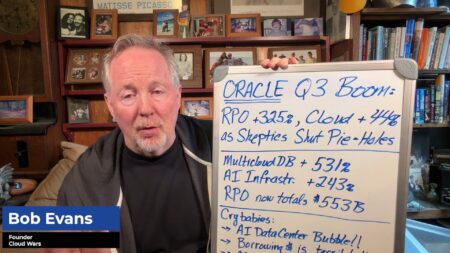
Oracle’s explosive Q3 growth, including a 325% surge in RPO and massive AI infrastructure demand, challenges critics claiming the cloud and AI data center boom is an unsustainable bubble.

New AI features deliver notable enhancements to five types of SharePoint content while the UX is refreshed and agentic AI strengthens governance.
In this episode, Diego Araujo discusses the challenges enterprises face when adopting AI copilots in Dynamics 365 Finance & Operations, emphasizing governance, user adoption, and selecting high-impact use cases that can demonstrate value quickly and overcome skepticism.

ServiceNow introduces the Autonomous Workforce — AI specialists that work alongside humans to run enterprise workflows end-to-end.

Facing unprecedented pressure from customers navigating AI transformation, SAP, Oracle, and Workday are restructuring their sales organizations. Each company is simplifying customer engagement, flattening leadership structures, and aligning sales with services to deliver faster decisions and stronger outcomes.
As enterprises require AI models to deliver consistent, secure performances on a regular basis, organizations need an AI-ready security foundation that protects their data, meets regulatory demands, and brings order.
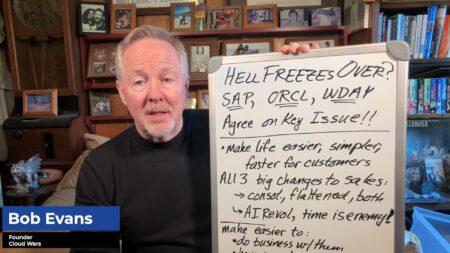
In a rare alignment, SAP, Oracle, and Workday are simplifying sales models to reduce complexity and accelerate digital transformation for customers navigating the AI revolution.

Oracle’s fiscal Q3 could deliver massive cloud and RPO growth driven by AI demand, though it may still fall short of Google Cloud’s 48% hyperscaler growth benchmark.
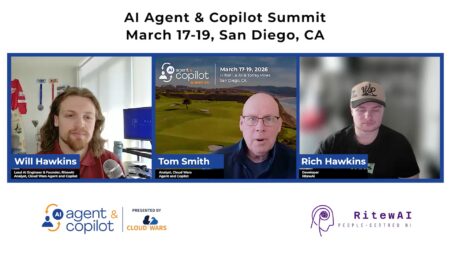
Framework lets users and developers bring their own models, supports both A2A and MCP for seamless integration of diverse AI tools, Will Hawkins and Rich Hawkins note.
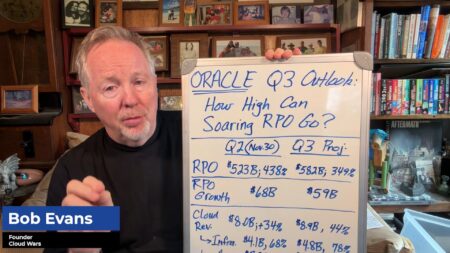
Oracle’s Q3 outlook reveals explosive growth in remaining performance obligations, suggesting the company’s AI training and infrastructure capabilities are driving enormous future demand beyond its OpenAI partnership.