


Oracle lands a major 10-year Pentagon contract worth up to $7 billion, strengthening its government credentials while creating a potentially significant stream of recurring revenue.
Oracle lands a major 10-year Pentagon contract worth up to $7 billion, strengthening its government credentials while creating a potentially significant stream of recurring revenue.

Microsoft, Oracle, Google Cloud, and AWS have amassed $2.3 trillion in contracted backlog, underscoring unprecedented demand across the booming cloud and AI economy.

Google Cloud delivered standout Q2 momentum, adding as much new quarterly revenue as Microsoft and more than AWS despite operating from a significantly smaller revenue base.

AI agents are beginning to outpace Copilot licenses, signaling that organizations are creating increasingly valuable custom automation across the Microsoft ecosystem.

Microsoft and more than 20 tech companies urge U.S. lawmakers to protect open-weight AI models, arguing openness drives innovation and competition.
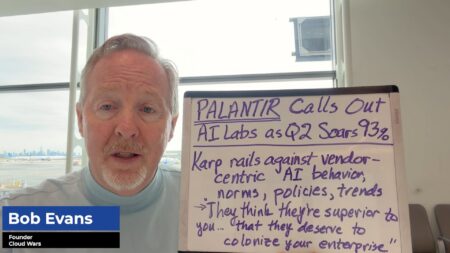
Palantir’s record growth underscores Alex Karp’s belief that customer-controlled AI will produce better business outcomes than today’s dominant technology models.

Businesses can unlock greater AI value by understanding when to use chat assistants, coding agents, co-work agents, or custom workflows.

OpenAI’s GPT-5.6 is now the preferred model for Microsoft 365 Copilot, highlighting how AI efficiency is becoming a critical competitive advantage.

AWS delivered its strongest quarter in years, reshuffling hyperscaler growth rankings and intensifying competition with Microsoft and Google Cloud in the AI economy.

SAP is approaching a potential $30 billion cloud business as its partner-led strategy continues to outpace traditional enterprise software competitors.

A screenless AI companion from OpenAI could redefine smart home technology by combining conversational AI with contextual awareness and adaptive personalization.

Microsoft’s consistency contrasts sharply with Google’s accelerating growth, revealing two very different momentum stories in today’s cloud infrastructure market.

Microsoft says AI sovereignty is about maintaining national control while embracing the world’s best AI technologies, rather than isolating countries from global innovation.

Google Cloud’s 82% growth highlights a dramatic shift in customer demand as Microsoft and AWS prepare to report earnings in a rapidly evolving AI market.
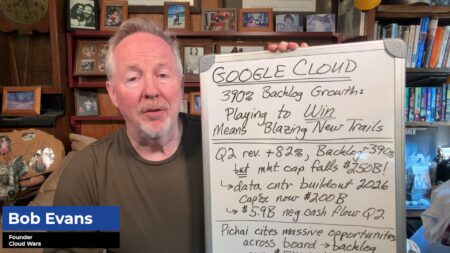
Alphabet is embracing massive AI infrastructure investments despite investor backlash, betting that today’s spending will secure tomorrow’s cloud leadership.

Salesforce is deepening Slack’s role in enterprise AI by allowing users to orchestrate multiple AI agents while maintaining centralized authentication and security.
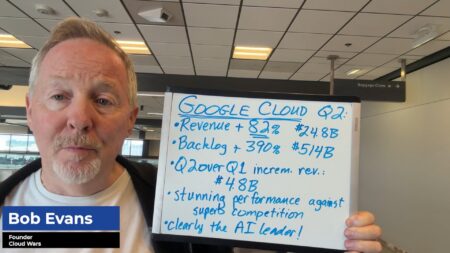
Explosive Q2 results suggest Google Cloud is outperforming rivals where it matters most—winning new AI business and accelerating faster than Microsoft Cloud and AWS.

In a fireside chat with John Siefert, Dewain Robinson explains how reasoning models are transforming Copilot Studio into an intelligent orchestration platform for enterprise AI.

Microsoft’s latest education findings reveal that AI access is no longer the hurdle—effective implementation and structured training are.

Google Cloud and Palantir are entering Q2 earnings with industry-leading growth, driven by AI-native strategies, customer trust, and differentiated execution.