

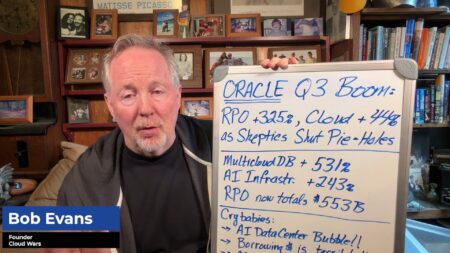
Oracle’s explosive Q3 growth, including a 325% surge in RPO and massive AI infrastructure demand, challenges critics claiming the cloud and AI data center boom is an unsustainable bubble.
Oracle’s explosive Q3 growth, including a 325% surge in RPO and massive AI infrastructure demand, challenges critics claiming the cloud and AI data center boom is an unsustainable bubble.

In this episode, Diego Araujo discusses the challenges enterprises face when adopting AI copilots in Dynamics 365 Finance & Operations, emphasizing governance, user adoption, and selecting high-impact use cases that can demonstrate value quickly and overcome skepticism.

ServiceNow introduces the Autonomous Workforce — AI specialists that work alongside humans to run enterprise workflows end-to-end.

As enterprises require AI models to deliver consistent, secure performances on a regular basis, organizations need an AI-ready security foundation that protects their data, meets regulatory demands, and brings order.
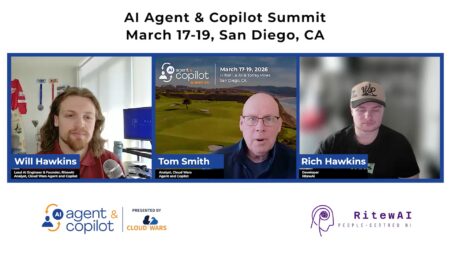
Framework lets users and developers bring their own models, supports both A2A and MCP for seamless integration of diverse AI tools, Will Hawkins and Rich Hawkins note.
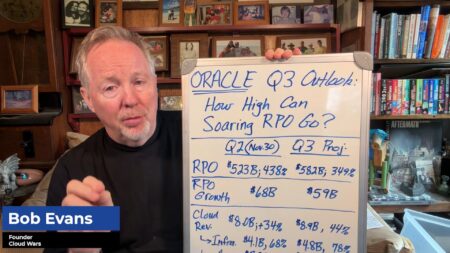
Oracle’s Q3 outlook reveals explosive growth in remaining performance obligations, suggesting the company’s AI training and infrastructure capabilities are driving enormous future demand beyond its OpenAI partnership.
With only about 15% of consumers using customer-facing AI, grocery retailers are shifting their strategy. Instead of pushing AI directly to shoppers, companies are investing in AI copilots for store associates to drive operational efficiency and better customer service.

As AI infrastructure demand surges toward a projected $4.3 trillion market, OpenAI recalibrates its spending timeline to balance investor confidence with continued aggressive investment in compute infrastructure.

Monday’s outage impacting several Claude tools was relatively brief, but it highlights the integral role of AI in modern workflows and the need for robust continuity plans.
Mason Siefert explores how Microsoft is advancing enterprise security from traditional detection to AI-powered investigation and response.
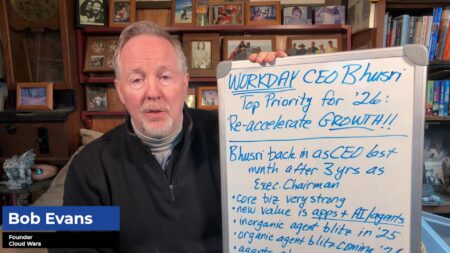
Workday is betting its future growth on blending AI agents with its existing HR and finance platforms, rejecting the notion that large language models alone can replace enterprise software.
Microsoft expands Copilot with business-process agents, tuning templates, and standalone AI assistants designed to transform workflows across sales, finance, service, and enterprise productivity.

Microsoft has introduced the first fully integrated learning agent for students, shifting AI in education from reactive tutors to proactive guidance. With Understand, Practice, and Study modes, this agent actively structures how students learn.

Salesforce posts 12% Q4 revenue growth and 14% RPO growth, signaling a confident return to high-performance execution.
Alithya’s Chad Weiner breaks down how to move from AI curiosity to real execution using Copilot Studio and Microsoft 365 agents.
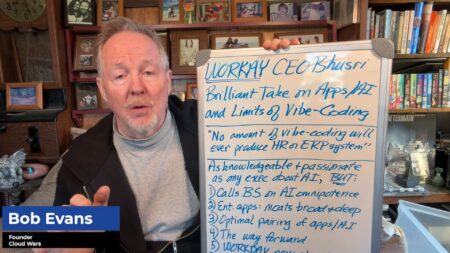
Workday’s Q4 call reframed the AI debate, emphasizing that enterprise applications remain essential even as AI accelerates innovation across HR, ERP, and beyond.
Microsoft unveils new Copilot Studio tools to help enterprises systematically evaluate, govern, and scale AI agents with confidence.

Mustafa Suleyman predicts AI will achieve human-level performance across most professional tasks within 18 months, signaling massive disruption — and opportunity — for white-collar workers.
In this AI Agent & Copilot Minute, Mason Siefert details the impact of Answer Engine Optimization (AEO) and Generative Engine Optimization (GEO) on making AI assistants a trusted source.
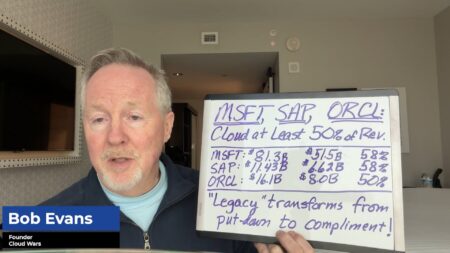
Legacy expertise in on-prem and cloud is emerging as a decisive advantage for Microsoft, SAP, and Oracle in the expanding AI economy.