


Latest MCP product from Microsoft works with cloud or on-premises SQL databases for efficient, secure connections to corporate resources without requiring language or framework expertise.
AI agents are advancing rapidly, but compliance concerns persist, and Panopticore aims to solve this with deterministic governance and verifiable audit trails at the network infrastructure level.
Google Cloud is rapidly gaining momentum in the AI-driven cloud market, outpacing AWS and Microsoft in growth rates while reshaping competitive dynamics despite still trailing both rivals in total revenue scale.
Despite Microsoft and AWS dominating in scale, Google Cloud’s Q4 performance suggests it may be capturing a disproportionate share of new enterprise cloud and AI workloads.
Google introduces Gemma 4, an advanced open AI model series designed for local deployment. With mobile-first capabilities, multimodal processing, and strong reasoning, it empowers developers to build scalable AI applications without relying on cloud infrastructure.
Round of enhancements also includes simplified prompting during agent-building processes, new content moderation controls to govern sensitive material.
Microsoft’s $10 billion Japan investment underscores a strategy combining AI infrastructure, workforce development, and data sovereignty to drive global growth while meeting increasingly strict regional compliance requirements.
Microsoft’s shift toward in-house AI models reflects a broader strategy to reduce dependence on OpenAI while strengthening its position as both an AI platform provider and model innovator.
With revenue scaling faster than Alphabet and Meta, OpenAI is investing heavily in infrastructure and partnerships to support surging AI demand and enterprise adoption.
Through its AI Tour and new initiatives, Microsoft is transforming South Korea into a global AI hub while investing heavily in Thailand’s cloud and AI infrastructure to accelerate national competitiveness and workforce readiness.
Initial release supports actions across agents, multiple AI models, and interoperability through the two most widely embraced interoperability standards.
New metrics provide visibility into usage patterns, while expanded controls improve governance over content sources in Purview platform.
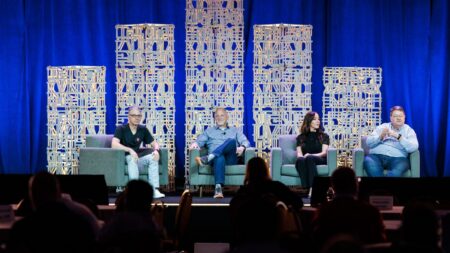
A podcast discussion between Chander Vaidyanathan, John Siefert, and Morgan Jonnson highlights the role of AP automation in reshaping the modern finance function.
Zenity and ServiceNow are pioneering AI SecOps, combining governance and security capabilities to help enterprises confidently deploy and manage AI agents at scale across business operations.
New features enhance research quality by using multiple models to produce outputs while comparing and refining results, as well as optimizing presentation of research results.
Microsoft’s latest Windows update signals a shift from widespread Copilot deployment toward more intentional, value-driven AI integration and agentic experiences.
Marc Benioff’s vision of the Agentic Enterprise places Slack at the core, transforming it into an operating system where AI agents collaborate with humans to drive productivity, innovation, and faster decision-making.
The concept of an “AI agentic divide” highlights how forward-thinking companies are accelerating innovation while others risk falling behind in adopting AI-driven workflows.
Microsoft’s 2026 Release Wave 1 introduces deeper Copilot integration, expanded agentic AI experiences, and new governance and automation capabilities across Dynamics 365, Power Platform, and Microsoft 365 Copilot, accelerating the shift toward enterprise-wide agentic operations.
With 209% ROI and six-month payback, Business Central is helping organizations streamline finance operations while enabling AI-powered insights through unified data and standardized processes.