


From victim and media notification to legal liabilities and government considerations, the many issues that arise after a security breach are more easily addressed with the help of a lawyer. Frank explains why.
From victim and media notification to legal liabilities and government considerations, the many issues that arise after a security breach are more easily addressed with the help of a lawyer. Frank explains why.

Analyst Bill Doerrfeld discusses the benefits and drawbacks of low-code/no-code with CEO Prashanth Chandrasekar, giving examples of how the approach both widens businesses’ horizons and limits them.
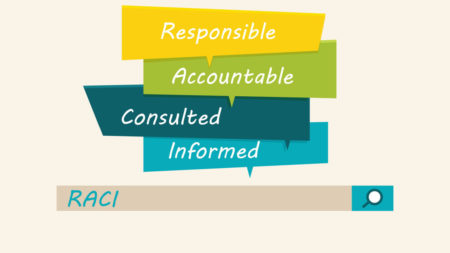
The first article in a series on the top 10 things to do if you’ve been breached discusses RACI (responsible, accountable, consulted, informed), a framework for defining roles and responsibilities in projects or processes.

In this Data Modernization Battleground moment, Chris says that cybersecurity professionals must understand data inventory, how businesses are using data, and who has access to data.

Analyst Chrus Hughes takes a look at EPSS, a new approach to evaluating vulnerability that takes into account not only criticality and scores, but also exploitability.

Wayne recaps Data Modernization Battleground sessions with Teradata and Okera, which discussed their data analytics for multi-cloud and data security solutions.

From hackathons and gamification to champion programs and callouts, there are many ways for security teams to build essential relationships with development teams.

Janet looks at this year’s Verizon Data Breach Investigations Report (DBIR) and singles out a few facts that can help organizations evaluate risk in partnership strategy.

Chris provides takeaways from the Cyber Safety Review Board’s recent Log4j incident report.
Bill Doerrfeld speaks with oak9 Co-founder Aakash Shah about ways to reduce known and unknown vulnerabilities brought on by open-source software.

As Bill explains, continuous delivery/deployment scenarios require special and specific security — especially in industries that handle sensitive personal and financial data.

Penetration testing is an inherently manual process and runs in contrast to the DevSecOps movement, so where does it fit in? Robert Wood delves into it.

It’s common for the C-suite to look at cybersecurity efforts with fear, uncertainty, and doubt (FUD). Here’s why that needs to stop, and how to do it.

Managing AI bias empowers organizations to unlock AI’s tremendous opportunity to drive positive outcomes, writes Robert Wood in this look at the new NIST AI playbook’s main takeaways on the topic.
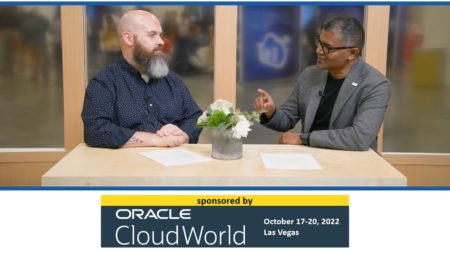
In this CloudWorld News Desk interview, Oracle Senior VP of Cloud Infrastructure Mahesh Thiagarajan explains why some users are still reluctant to engage with multi-cloud platforms.

Quantifying cyber risk helps board members and other business leaders see the importance of cybersecurity investment. As Chris Hughes explains, the FAIR model offers a framework to do this.

Bob Evans explains how CEO Arvind Krishna’s intense focus on the cloud and AI has transformed IBM into an innovative and disruptive contender.

In this episode, Bob Evans says that CEO Arvind Krishna deserves huge credit for the leadership and unification he has brought to the company, which has made it easier for customers to engage.

Doing things the way they’ve always been done is never a good strategy where technology is concerned, and security is no exception, writes Robert Wood.

What’s in a vulnerability score? Chris Hughes explains what these are, where they come from, and how cybersecurity professionals should approach them.