

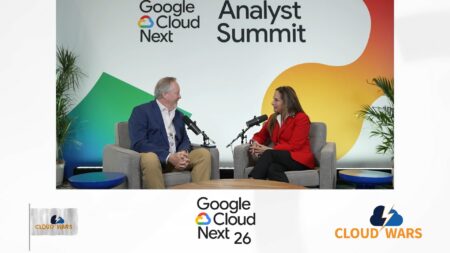
Open cloud strategies and agentic AI are helping public sector organizations modernize faster without costly vendor lock-in.
Open cloud strategies and agentic AI are helping public sector organizations modernize faster without costly vendor lock-in.

Stellantis and Microsoft launch a sweeping AI partnership spanning engineering, cybersecurity, and enterprise transformation.
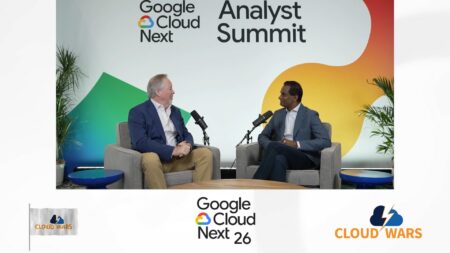
Enterprise AI success is shifting from software consumption metrics to measurable business outcomes and shared accountability between providers and customers.
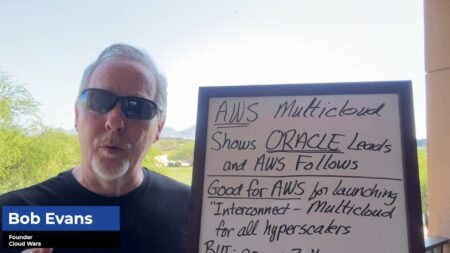
Multi-cloud partnerships reveal a deeper divide in cloud leadership, where Oracle’s early moves enabled seamless cross-platform deployment, leaving AWS positioned as a delayed follower.

Google Cloud is rapidly gaining momentum in the AI-driven cloud market, outpacing AWS and Microsoft in growth rates while reshaping competitive dynamics despite still trailing both rivals in total revenue scale.

Through its AI Tour and new initiatives, Microsoft is transforming South Korea into a global AI hub while investing heavily in Thailand’s cloud and AI infrastructure to accelerate national competitiveness and workforce readiness.

With 209% ROI and six-month payback, Business Central is helping organizations streamline finance operations while enabling AI-powered insights through unified data and standardized processes.

With new agentic AI capabilities, Oracle eliminates the need for complex data pipelines, enabling faster development and deployment of AI applications while maintaining enterprise-grade security and scalability.

Larry Ellison steps back on earnings calls as Mike Sicilia and Clay Magouyrk take the lead, signaling a deliberate and confident leadership transition at Oracle.

Oracle’s leadership transition signals a new chapter, with Larry Ellison focusing on technology vision while the new CEOs take the lead.
Returning CEO Aneel Bhusri used Workday’s Q4 earnings call to dismantle claims that AI will replace ERP and HR systems, outlining instead a hybrid future where deterministic enterprise apps and probabilistic AI work together.

AWS is seeing stronger-than-expected growth in non-AI workloads as enterprises accelerate cloud migrations. Jassy says both core infrastructure and AI services are driving demand, requiring rapid capacity expansion across data centers and power infrastructure.

By combining AWS AI capabilities with NTT DATA’s delivery scale, the partnership accelerates legacy modernization and responsible AI adoption in highly regulated sectors worldwide.

The hyperscalers’ record-breaking CapEx surge reflects real AI demand, not a bubble, as backlog growth across the Cloud Wars Top 10 hits historic highs.

Google Cloud and AWS surpassed Microsoft in Q4 cloud revenue growth, signaling a shift in customer preference and prompting a downgrade of Microsoft to #3 in the Cloud Wars Top 10.

With a 48% Q4 surge, Google Cloud has overtaken Microsoft Cloud in incremental growth, demonstrating strong AI leadership via innovations like Gemini 3 and a future-ready cloud stack.

Google Cloud’s Q4 surge confirms its rise to #1 in Cloud Wars, outpacing Microsoft in growth, momentum, and future-focused AI strategy.

Q4 results show Palantir achieving 73% revenue growth without expanding its sales force, thanks to an outcome-based pricing model few rivals can match.

Palantir stuns the market with 70% Q4 growth and accelerating momentum, signaling a powerful new model for the AI-driven enterprise economy.

SAP’s Q4 results showed powerful cloud momentum, with total cloud backlog up 30% to $88 billion, cloud revenue up 26%, and CEO Christian Klein outlining a five-point growth plan for 2026 and beyond.