


Meta’s massive Azure spending shows how AI is reshaping tech competition, with rivals increasingly becoming customers as infrastructure emerges as the new battleground.
Meta’s massive Azure spending shows how AI is reshaping tech competition, with rivals increasingly becoming customers as infrastructure emerges as the new battleground.

Microsoft’s investment in Databricks reflects a broader strategy to strengthen every layer of the enterprise AI stack—from infrastructure and data platforms to intelligent business applications.
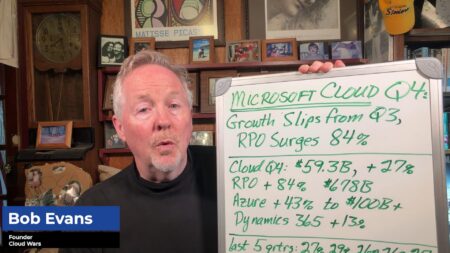
Microsoft’s consistency contrasts sharply with Google’s accelerating growth, revealing two very different momentum stories in today’s cloud infrastructure market.

Microsoft’s partnership with 3M demonstrates that the next competitive frontier in AI infrastructure extends well beyond GPUs, with networking and optical connectivity emerging as critical strategic differentiators.

AWS launched its Interconnect-multicloud service years after Oracle pioneered the concept, highlighting a shift in cloud leadership. Oracle’s partnerships and strategy have reshaped the market, leaving AWS in a reactive, follower position.

Microsoft and Publicis Groupe are expanding a long-running partnership to create a full-stack marketing solution powered by cloud, agentic AI, and identity-based data, helping marketers automate workflows, modernize legacy systems, and unlock faster, smarter growth opportunities.

Through its AI Tour and new initiatives, Microsoft is transforming South Korea into a global AI hub while investing heavily in Thailand’s cloud and AI infrastructure to accelerate national competitiveness and workforce readiness.
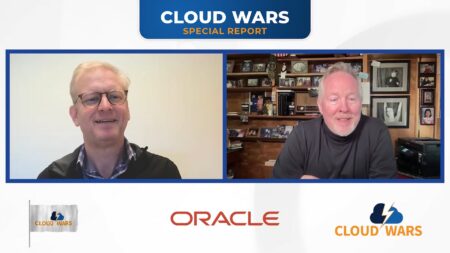
Multi-cloud databases are enabling faster AI adoption by bringing enterprise data closer to cloud-native tools and services.

Microsoft demonstrates the real-world power of Copilot Studio with a customer support AI agent that reduces latency by 61% and cuts human escalations by 70% through multi-agent orchestration.

Jen Harris and John Siefert examine the shift from centers of excellence to centers of value, as AI agents automate reactive work and push humans toward more creative, proactive roles.

A practical conversation on enterprise AI adoption that focuses on governance, collaboration, and learning from failure rather than chasing hype or replacing human interaction.

Claude’s integration into Microsoft Foundry allows healthcare organizations to utilize domain-specific tools to streamline operations and improve patient outcomes.

Oracle is using its multicloud partnerships with Microsoft, Google and AWS to reignite its core database business. It aims to reach $20 billion in revenue within five years by riding the AI inference wave and offering flexible multicloud deployment.

AWS, once the cloud pioneer, is now lagging behind Microsoft, Google, and Oracle in growth and innovation amid the AI Revolution.
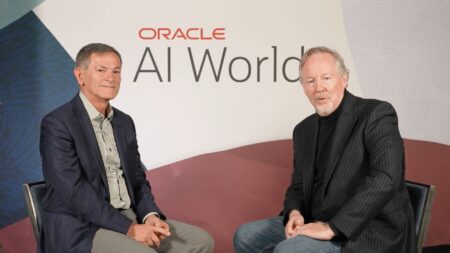
At Oracle’s AI World event in Las Vegas, Executive VP Juan Loaiza discusses why databases are more important than ever, because AI is making data accessible in new ways, enabling business users to interact via natural language rather than traditional SQL.
With customer choice, end‑to‑end capabilities, and strong governance, Gemini Enterprise positions Google Cloud as the most complete AI solution for the enterprise.

Microsoft’s new marketplace supports the scaling of innovation by simplifying access to AI-driven tools and platforms.

Oracle and Google Cloud have partnered to bring Gemini AI to Oracle Cloud Infrastructure (OCI), signaling a major shift in tech rivalries and boosting customer value through mult-icloud innovation.

Satya Nadella identified three drivers of Azure’s Q4 growth: on-prem migrations, native app scaling, and AI expansion.

Satya Nadella broke tradition in Microsoft’s Q4 call, directly comparing Microsoft’s AI and cloud capabilities to AWS, Google, and Oracle, citing unmatched scale, speed, and infrastructure capacity.