


Wayne Sadin encourages CIOs and CFOs to consider the ROI of generative AI, which has led to an “arms race” in the tech world.
Wayne Sadin encourages CIOs and CFOs to consider the ROI of generative AI, which has led to an “arms race” in the tech world.

Wayne Sadin shares why the advent of generative AI puts pressure on organizations to tighten up their data and security strategies to avoid bias and protect sensitive data.

With the rise of generative AI, companies with weak data exfiltration controls are at even more risk of inadvertent disclosure of data, explains Wayne Sadin.

Corporate users need to take pause and consider the potential for bias before they move too quickly into generative AI. Analyst Wayne Sadin explains why.
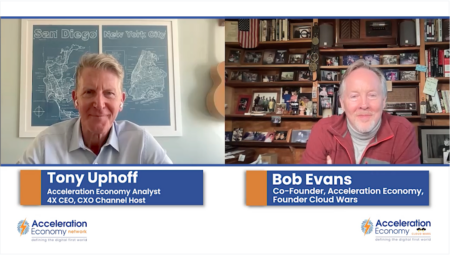
Tony Uphoff discusses the splashy intro of accessible generative AI and what biz leaders should be doing (and not doing) to take advantage.

C3 AI is leveraging generative AI to deliver more sophisticated enterprise search capabilities and more efficient access to data.

Aaron Back defines generative AI and shares a few use cases and considerations for vetting the technology before implementation.

ChatGPT is both the most overhyped and underhyped technology today. Tony Uphoff explains why.

Generative AI and using AI algorithms can help apply data to continuously populate new content in the Metaverse.

NVIDIA launched fVDB, a deep learning framework demonstrating further use cases of digital twin technology and generative physical AI.

Artificial intelligence is creating new business categories, disrupting traditional e-commerce, and empowering entrepreneurs to build products and services with unprecedented capabilities.

Microsoft executives Leon Welicki and Dona Sarkar joined Innovia Consulting’s Shawn Dorward to discuss practical AI adoption strategies, emphasizing leadership, clear business goals, and choosing the right technologies to improve enterprise workflows.

Google Cloud’s Gemini Agent combines personal AI capabilities with enterprise-grade governance, multicloud connectivity, and model flexibility. CEO Thomas Kurian believes these integrated features will help organizations deploy sophisticated AI agents more efficiently and affordably.

As AI becomes more powerful and autonomous, Microsoft is expanding its responsible AI approach with stronger access controls, agent monitoring, telemetry, memory management and safeguards designed to address increasingly complex interactions between models, tools, data and users.
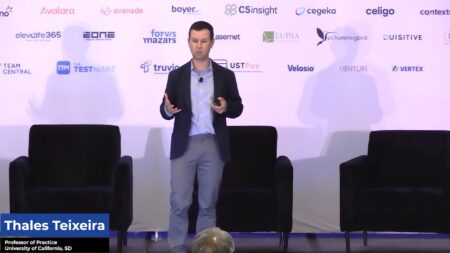
Thales Teixeira shares a practical framework for deploying customer-centric AI agents, highlighting the common implementation mistakes organizations should avoid and the strategies that turn AI into a true competitive advantage.

Dona Sarkar says AI has yet to find its defining mainstream use case, and the companies preparing now will be best positioned when that breakthrough moment arrives.
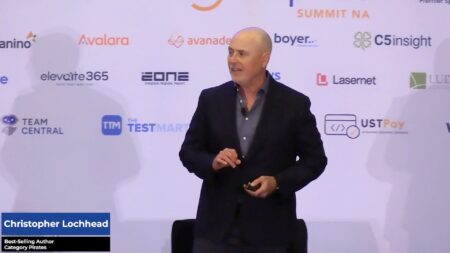
Christopher Lochhead explains how AI is making knowledge and execution increasingly free, shifting competitive advantage to agent-driven systems.

The biggest AI opportunity in enterprise software may be reducing implementation friction, not simply adding generative features.
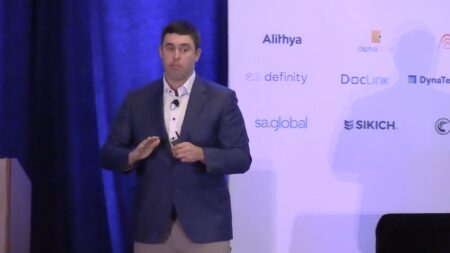
Microsoft’s James Oleinik explains how enterprise AI is shifting from a human-driven assistant to systems that independently execute work on behalf of users.

Dona Sarkar explains how the shift from generative AI to agentic AI is redefining enterprise systems through self-correcting, multi-agent collaboration.