


Google Cloud and Mahindra are bringing Gemini Enterprise directly into vehicles, demonstrating how AI is moving beyond traditional digital environments and becoming embedded in physical-world endpoints.
Google Cloud and Mahindra are bringing Gemini Enterprise directly into vehicles, demonstrating how AI is moving beyond traditional digital environments and becoming embedded in physical-world endpoints.

AI monetization is moving upstream as rising agentic development costs push Microsoft and other vendors to charge builders for creating, testing, and executing AI-powered products.

Marc Benioff’s Salesforce is betting that combining Anthropic’s AI momentum with its massive enterprise presence can unlock new opportunities for customers and accelerate its AI strategy.

AI tokens are getting dramatically cheaper, but agentic reasoning is consuming far more of them, creating a surprising new challenge for enterprise AI economics.

AI security is becoming an ecosystem problem, and Workday is joining forces with major technology companies to share knowledge and strengthen protections across enterprise AI.

Google Cloud and Oracle are emerging as an AI power pair, combining Gemini, Fusion applications, and Oracle AI Database to help customers accelerate enterprise AI transformation.

After proving its custom silicon strategy with Maia 200, Microsoft is preparing a much larger Maia 300 push designed to support both AI training and inference.

Google Cloud’s infrastructure strategy gives frontier AI lab Mirendil the flexibility and scale needed to speed up the AI research loop.
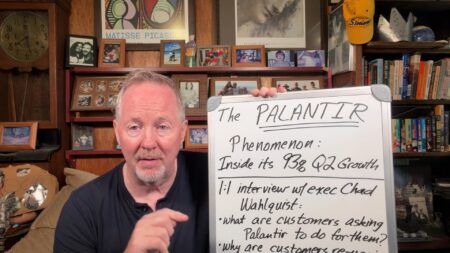
Palantir’s growth accelerated from 71% to 85% to 93% over three quarters as customer demand, expanding contracts, and a distinctive value-based pricing model fuel momentum.
Palantir’s rapid growth reflects an enterprise AI strategy centered on measurable customer outcomes, operational transformation, sovereignty, and deep long-term partnerships.

Salesforce scores a major AI win as the Pentagon approves its agents for autonomous tasks, reinforcing the security and governance credentials of its agentic infrastructure.

Enterprise AI’s next breakthrough will come from evaluating agents against real business workflows and continuously improving their performance with proprietary organizational knowledge.

Microsoft Research and Paige’s PRISM 2 combines nearly 2.5 million pathology images with clinical language, creating a versatile AI model for cancer detection, biomarker prediction, and research.

Agentic reasoning loops promise better AI answers, but could dramatically increase token consumption and costs as enterprise adoption grows.

Palantir CEO Alex Karp is challenging traditional enterprise software with an approach that prioritizes customer data control, streamlined selling, and outcomes-based compensation.

AI vendors are moving toward consumption-based billing as rising token costs make traditional flat-fee and user-based licensing increasingly difficult to sustain.

Oracle is expanding its Google Cloud partnership by bringing Gemini models across its enterprise AI portfolio, strengthening its flexible, multi-model approach to enterprise AI.

AI vendors are increasingly turning to forward deployment engineers as enterprises struggle to move AI pilots into production and consumption-based models grow.

Bill McDermott is combining ServiceNow’s AI Control Tower, cybersecurity, and governance capabilities to give CEOs greater certainty and control as enterprise AI creates unprecedented risk and complexity.
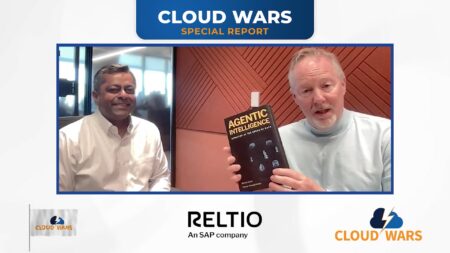
Enterprise AI success increasingly depends on trusted, interoperable data that connects existing technology investments with autonomous processes and next-generation business models.