


Google’s latest European research initiative signals a shift toward collaborative AI innovation, where technology developers provide the tools and scientific institutions establish the priorities for discovery.
“You give us three minutes and we will give you unique insights on the greatest growth market the world has ever known!“

I am your host, Bob Evans. Here you will see a full library of our daily news and commentary show from Cloud Wars that shares insights and perspective around the “re-imagination machine” that is the Cloud!
Google’s latest European research initiative signals a shift toward collaborative AI innovation, where technology developers provide the tools and scientific institutions establish the priorities for discovery.

Google Cloud could deliver extraordinary Q3 revenue growth of 90% to 100%, fueled by AI momentum, accelerating quarterly gains, and an expanding ecosystem that continues to outperform major cloud competitors.
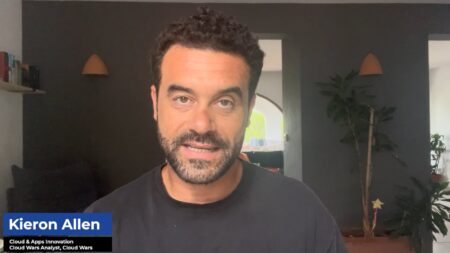
Microsoft launches a real-time speech transcription model delivering partial results in just over 100 milliseconds, setting the stage for faster, more accurate, and more intelligent AI voice agents.
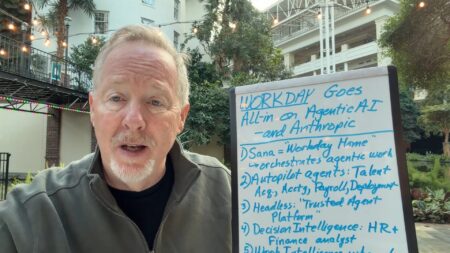
Workday doubles down on agentic AI at Workday Rising, unveiling Sana, four autopilot agents, and new intelligence capabilities designed to accelerate enterprise automation and strengthen its competitive position.

ServiceNow launches Flow, a standalone AI-native service desk that deploys in under a day and uses agentic automation to transform how businesses manage employee requests.
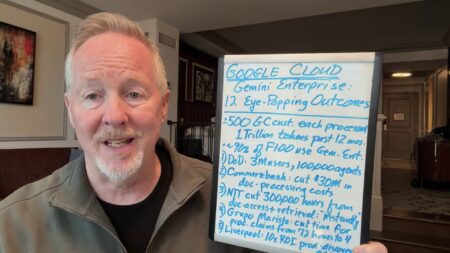
Google Cloud showcases 12 powerful Gemini Enterprise customer success stories, demonstrating how businesses are turning AI investments into cost savings, operational efficiency, and competitive advantage.
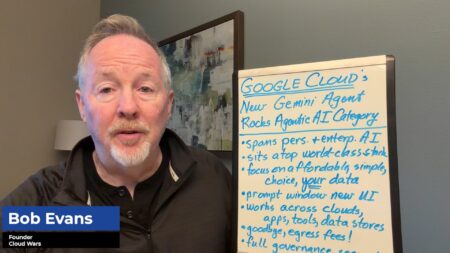
Google Cloud’s Gemini agent launch signals a broader shift in enterprise AI, as business leaders increasingly demand technology partners who understand operational priorities rather than simply promoting technical capabilities.
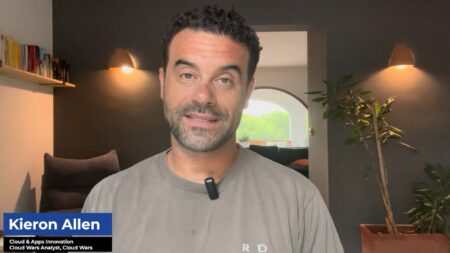
Workday launches Total Benefits, an AI-powered platform that simplifies benefits administration, empowers employees with personalized guidance, and signals a shift toward continuous, agentic AI-driven HR experiences.
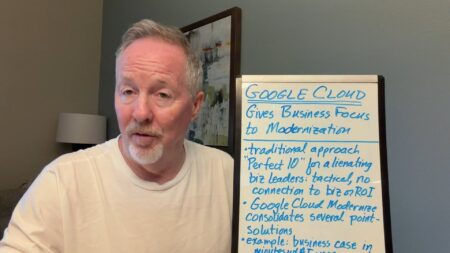
Google Cloud is simplifying enterprise modernization with an AI-driven, end-to-end approach that can shrink complex business-case processes from weeks to minutes.

SoftBank plans to borrow over $11 billion through bonds to help fund a $10 billion OpenAI investment, signaling extraordinary confidence in the AI company.
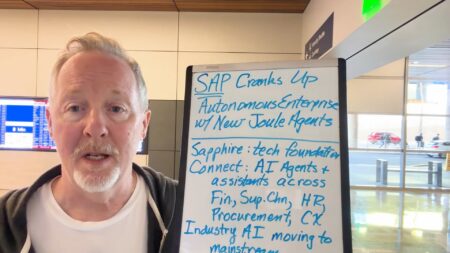
SAP is expanding its autonomous enterprise vision at Connect with AI-powered agents designed to connect business functions, data, governance, processes, and decision-making end to end.
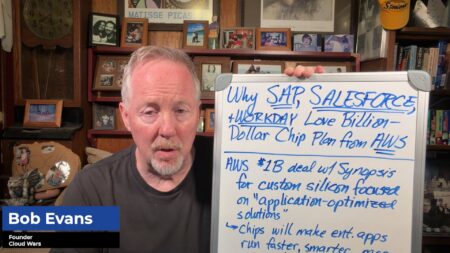
AWS’s billion-dollar Synopsys deal could bring application-optimized chips to enterprise software, strengthening AWS’s relationships with SAP, Salesforce, Workday, and their customers.
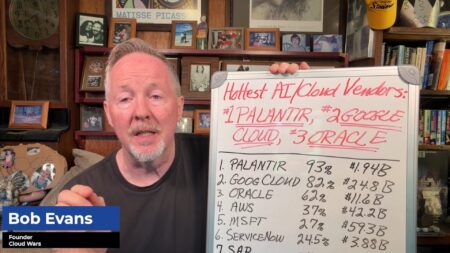
Palantir leads the Cloud Wars Top 10 with 93% growth as Google Cloud, Oracle, and AWS surge and AI platforms drive extraordinary enterprise demand.

Work IQ represents a potentially important evolution in enterprise AI, moving personalization beyond emails and documents toward a deeper understanding of organizational context.

Sam Altman’s Dreamforce conversation with Marc Benioff offers a revealing look at OpenAI’s thinking around AI safety, security, industry regulation, and corporate responsibility.
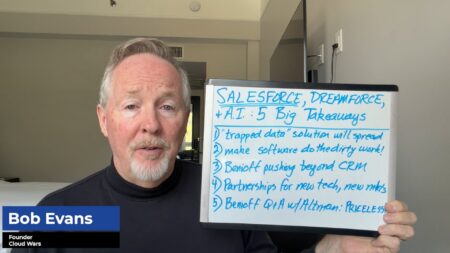
Mark Benioff’s conversation with Sam Altman capped a Dreamforce that positioned Salesforce as an increasingly prominent voice in the wider global AI debate.

Workday is expanding agentic AI across the contract lifecycle with a new Contract Workflow Agent designed to automate manual work and connect contract tasks with broader business workflows.

Microsoft plans to more than triple data center capacity to 38 gigawatts by 2032, highlighting the extraordinary infrastructure build-out required to meet soaring AI compute demand.

Microsoft is targeting CRM vendor lock-in with Dynamics 365 Activate, an AI-powered migration tool designed to make moving from Salesforce faster, simpler, and less risky.

Salesforce is reportedly considering a nearly $2 billion acquisition of Listen Labs, potentially bringing AI-powered customer research and deeper context into its Agentforce ecosystem.