


Rapid adoption of AI-driven coding tools could lead to a significant rise in software vulnerabilities, challenging current security practices.
Rapid adoption of AI-driven coding tools could lead to a significant rise in software vulnerabilities, challenging current security practices.
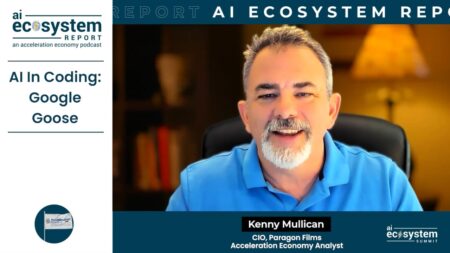
The rise of AI in cloud services is transforming coding with tools like Google’s Goose and GitHub Copilot, but careful integration is needed to balance benefits with potential drawbacks
The blurring lines between AI and low-code are reshaping software development, as AI complements low-code platforms and expands their capabilities.

With DroidGPT, Endor Labs applies generative AI to software development to ensure open-source packages are current and secure.

The future of software development is evolving to become more low-code, says Bill Doerrfeld, who explains with practical use cases that illustrate the benefits.

Microsoft’s Digital Defense Report 2026 explains how automation accelerates threats and why organizations must embrace continuous security monitoring, proactive threat detection, and faster incident response.
AI leaders are accelerating their push into vertical industries through customer-designed products, deeper data integration, and industry-specific skills.
New functions can support apps that combine Dynamics 365 apps with business context from WorkIQ for complete experiences, Microsoft partners say.
Companies are investing heavily in AI training, but many employees still struggle to apply AI to their everyday work. Role-specific education, protected experimentation time, accessible experts, and thoughtful incentives could help turn training into lasting adoption.

On the strength of customer design partnerships and an expansive ecosystem, Google Cloud delivers AI platforms that could unlock AI innovation in support of vertical use cases.

Google Cloud and Mahindra are bringing Gemini Enterprise directly into vehicles, demonstrating how AI is moving beyond traditional digital environments and becoming embedded in physical-world endpoints.

Consolidated AI chatbots raise order values up to 26% at Albertsons, while WalMart’s in-store AI use requires employees to further train AI models with business context.
Palantir’s extraordinary 93% revenue growth and CEO Alex Karp’s unconventional philosophy could reshape enterprise software, emphasizing AI sovereignty, customer control of data, intensive partnerships, and compensation tied directly to measurable value creation.

Palantir CEO Alex Karp is challenging traditional enterprise software with an approach that prioritizes customer data control, streamlined selling, and outcomes-based compensation.

Purview, Defender, and Graph API are all being enhanced to bring agents running on end-user devices under unified governance ‘control plane.’

AI is dramatically accelerating software development, but Cedric Wells argues that organizations must balance rapid innovation with architecture, security, governance, and quality assurance to safely move AI-generated solutions into production.

The new AI Deployment Wars reveal that enterprise customers need more than technology: they need strategy, process modernization, secure integration, and change management.
Palantir makes the argument that while some ERP standardization can be beneficial, an over-reliance on it can lead to squandered opportunity with emerging tech.

Akrites coordinates disclosure and remediation as discovery of open-source vulnerabilities in the AI Era is outrunning defense.

Working with DynaTech Systems, Solmax standardized global business processes and created a single source of truth, helping eliminate data silos and improve financial and operational decision-making across multiple regions.